Anyone getting ready to run the NYC Marathon needs to read this post! Here’s everything you need to know in advance to have the best day possible.
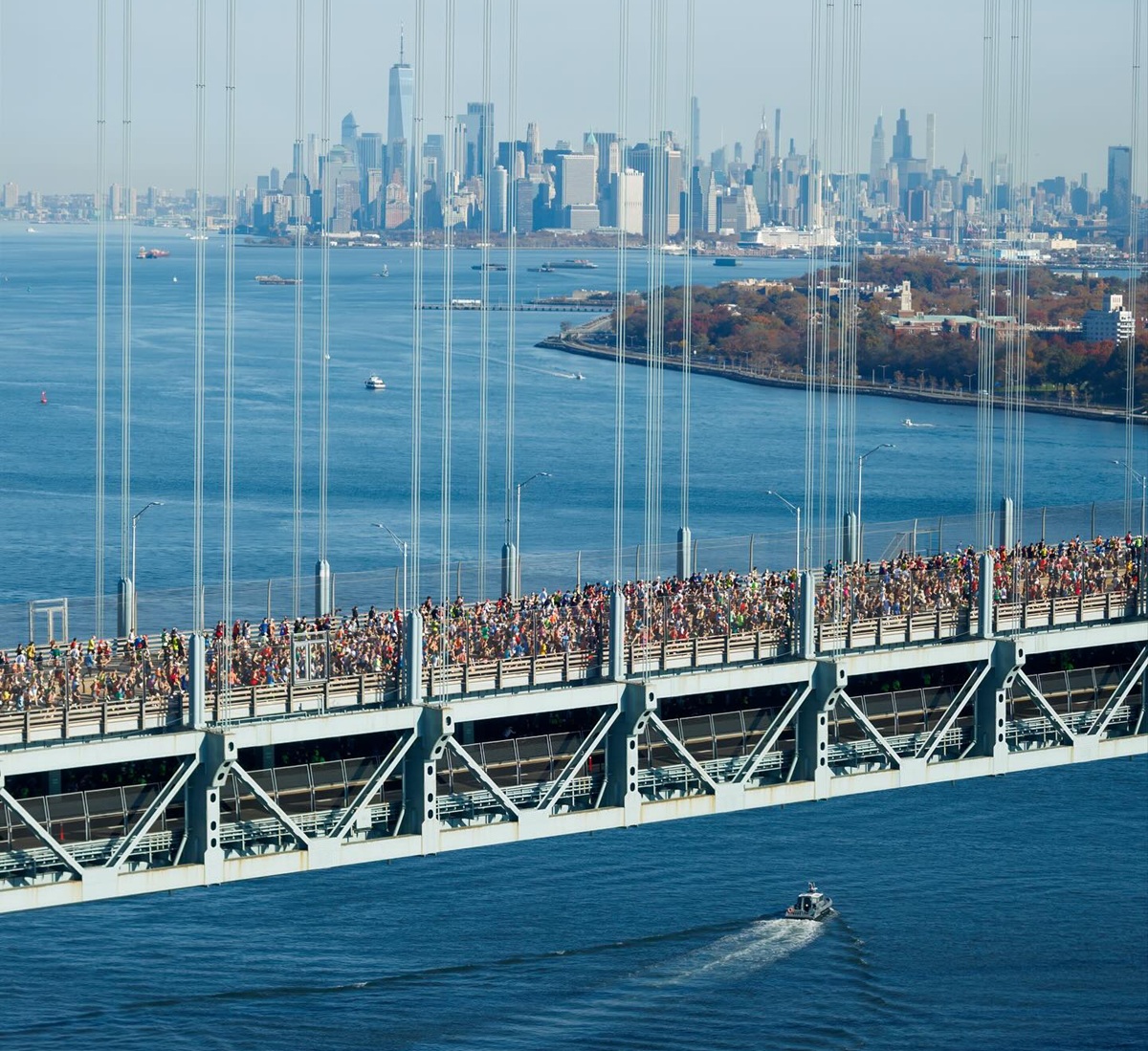
Hopefully these few key pieces to help make life easier. Once you start to realize how long it takes to train for a marathon, we hope you’ve started looking at the right plan!
Going in to the NYC Marathon, we always get a lot of questions about logistics surrounding the start and the finish and everything in between!
NYC Marathon Tips
With any race, we have a few standard recommendations for our athletes:
- Try not to walk around a ton before the race. Save it for post race especially in a city as large as NYC, it’s very easy to accidently rack up the steps.
- Have your pre-race dinner and morning of meal with you or planned out, so you know it’s food you tolerate
- Don’t get sucked in to driving the course. :) It’s going to take forever and absolutely freak you out.
Following are addition tips and tricks from all of the Run To The Finish coaches.
#1 Train for the Finishing Hills
While it’s great to have rolling hills throughout your long runs, you absolutely want to be ready for the final set of hills. This means:
- plotting out long runs that finish with hills
- including both short hill sprints and long hill repeats at the END of moderately long workouts
- utilizing varying inclines if treadmill training
- practicing how you control yourself on the downhill running to not burn out the quads
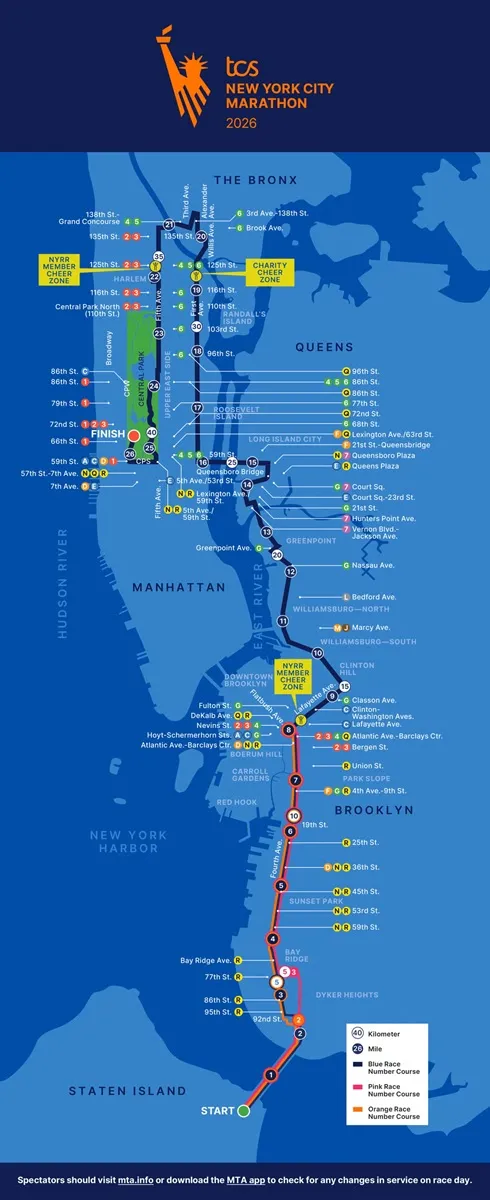
You will only gain 810 feet over the course of 26.2 miles, BUT that can feel like a lot when you’re working so hard (or haven’t trained for hills). Luckily you get an equal amount of downhill running.
#2 Marathon Expo
This year’s expo spans three days. Remember no one else can pick up your bib for you and there’s no race morning pickup so plan accordingly:
- Thursday, October 29 10am to 8pm
- Friday, October 30 10am to 8pm
- Saturday, October 31 0am to 5pm
Location: Jacob K. Javits Convention Center, Halls 3B and 3E, 11th Avenue at West 35th Street.
Many expos are not like they used to be; they’re massive events with activations, vendors, presentations, group runs, and more.
That means spending a lot of extra time on your feet. We don’t want that, remember? Which means if you want to enjoy it all, try to go on Thursday or Friday!
Right now you must schedule a time slot to pick up your bib. But know the expo is open to the public and will be very crowded.
#3 Plan Well Ahead for Your Start Line Arrival
Nothing is worse than the nightmare that you’ve missed the start…other than actually missing it.
One of the very cool and frustrating things about the NYC marathon is the starting area on Staten Island. It’s incredible sharing the area with so many fellow hyped up runners, but it takes a little work and planning to get there.
This is one time where staying near the start isn’t the big win we often look for.
Transportation to the Start Line
One of the things you want to consider is total time on feet. Don’t waste race morning by walking for a long time pre-race between the train, finding the right stop, and walking through the large start area. Here’s your options for getting to the NYC Marathon starting area
- Staten Island Ferry to buses – roughly 90 minutes
- Midtown Manhattan bus straight to start line – roughly 90 minutes
- New Jersey Bus from Metlife Stadium – roughly 60 minutes
- There is NO start line parking
- Private drop offs can be done – roughly 1/2 mile from starting area and must be done by 7AM
No matter which option you selected or which departure you are going to have a lot of time on your hands once you arrive.
The first wave isn’t until 9:10AM and you’ll like be there by 7:15 at the latest.
#4 Start Line Area NYC Marathon Tips
A few key things you may not know and tips to utilize the time well.
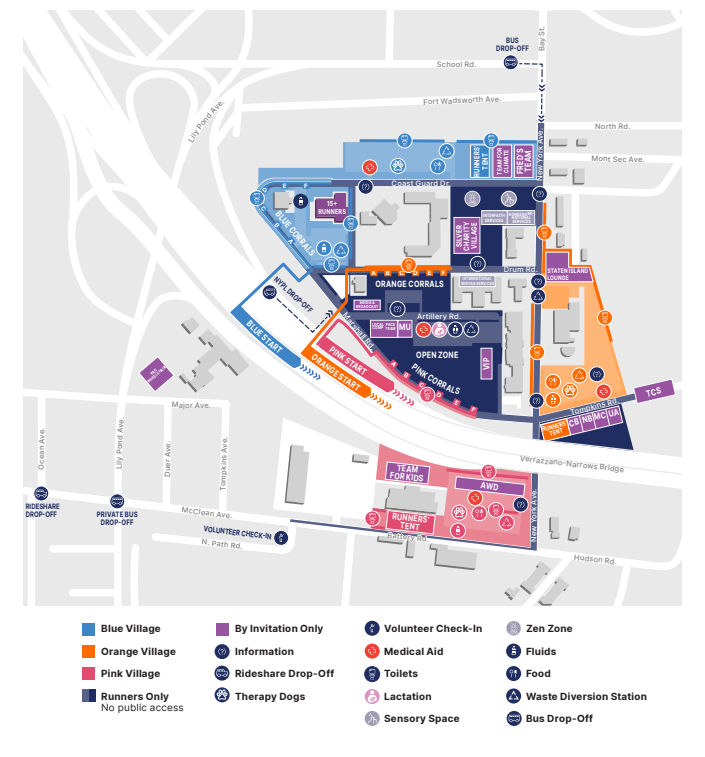
Bag Check
Bags cannot be checked at the start line! You must pre-register and drop your bag off the day before the race.
You may only bring in things in the clear bag provided at the expo.
Hydration
NYC does NOT allow hydration packs with bladders. So that means no hydration bladder, no packs with a large back area.
You are allowed vests that hold 1-liter bottles in the front pockets.
They DO allow running belts and handheld running bottles as long as they do not cover your bib.
Security Gates
You’ll go through security to get to where the corrals are. The lines move very quickly, but this is where they are checking for hydration or bringing in bags other than those allowed to be checked.
Selfie sticks and portable speakers are explicitly listed as prohibited on course. Whether it will be enforced, who knows.
Sit Down
Don’t waste tons of energy standing around.
You’re about to run 26.2 miles and standing is taking energy, and making your legs sore.
Sit. Wait. Then get up do some dynamic moves and get in to your corral.
Take Throw Away Clothes
The likelihood that it’s going to be chilly is very high. So remember that if you now need to sit around for hours, you are going to get chilled. Shivering again is going to waste energy.
- Bring throw away gloves so you can even wear them the first few miles
- Reuse a mylar blanket from a previous race
- Bring hot hands!
- Absolutely cover your head to keep in the heat
- Bring an old blanket and old clothes – things get picked up and donated afterwards
Bring Your Food
While there are some supplies from Gatorade to bagels available in the starting area, we don’t want you to be stressed about finding it or ensuring there’s still enough left.
With such a long gap between the time you wake up and the time you run, you must continue fueling.
- Keep sipping on electrolytes
- Eat a bagel and nut butter, especially if you have a later start
- In the final minutes before you start take in an energy gel or waffle or some high carb, quick sugar energy
I love this chart from Featherstone Nutrition as a reminder that with the late start you’re going to need breakfast, a snack and your start line gel.

Corrals
Once you get into your corral, know that it could still be a while before you cross the start line. Try to contain your nerves and energy. If you’re bouncing around, well, again you’re wasting energy.
NYC Marathon Course Strategy
NYC requires it’s own special strategy when you are thinking about pacing. It’s not just the massive bridges or the late hills, but the energy levels from crowds that can throw you off your planned pace.
Know that the course will feel very crowded from start to finish. That means holding yourself in check so you don’t weave around people and add distance to your race, and not getting caught up in anyone else’s pace.
Mile 1-2
You’ll start by going up a 3-4% grade, so embrace this as your chance to take the first mile appropriately slow! Know that you are saving energy for later in the race. If you are even 60 seconds slower than goal pace, it’s ok.
If you start out too fast on an uphill, you expend far more energy than if you start out fast on a flat. Control yourself.
We call that a warm-up, which helps you feel stronger for longer.
You will find that time back on some downhills.
Miles 3-15
Now you’re in the heart of the course and will start to hit some of the BIG crowds. I am one of the many who let that excitement push me way past my goal pace…it hurt so bad by mile 20.
Do NOT be that person. Stay right at or just slower than your goal pace.
When running the bridges, think about maintaining the same level of effort on the up and the down; this evens out pace without overtaxing you.
- Fuel early and often is the motto of sports nutritionists. Take that first gel 30 minutes in and keep going
- This section is quieter and rolling hills.
- Keep checking in with yourself on total effort and stay close to your goal pace, no overshooting it or trying to make up time later
- Remember to smile – it legitimately changes your body response and helps
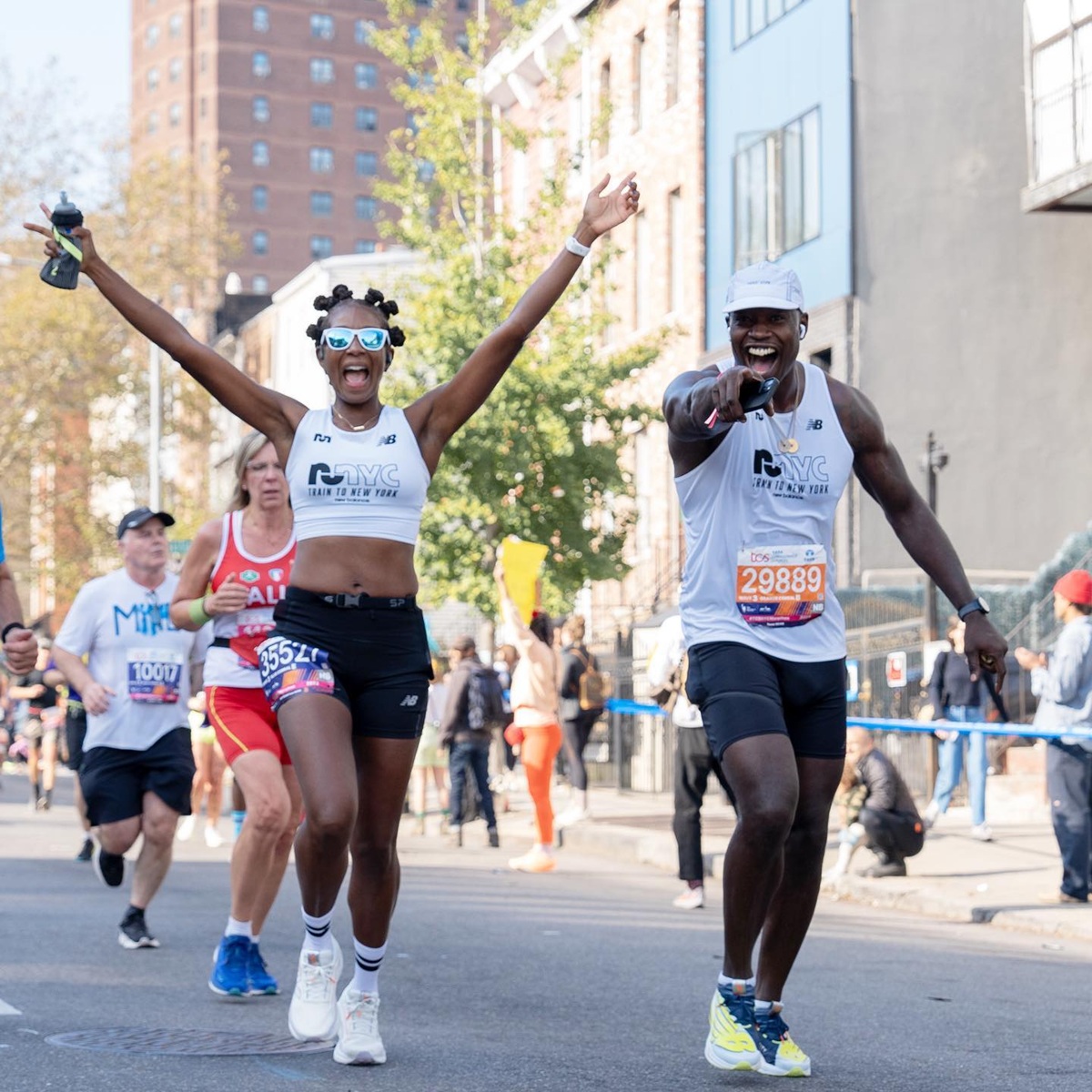
Miles 16- 20
First you’re going to get a downhill and then a long straight path. Without all the turns, this lets you dial in to goal pace and keep focusing on maintaining the same effort level.
Coming off the Queensborough Bridge, you’ll suddenly hear the massive crowds, and this is where you must keep yourself in check. I mean the energy is PHENOMENAL.
But overrunning at mile 16 will cost you at mile 20, when you start hitting some additional hills.
Starting in 2026, after crossing the Willis Avenue Bridge, runners will turn left onto East 135th Street, then right onto Alexander Avenue, and continue straight on Alexander Avenue. Then, instead of turning left on East 138th Street, they will turn left onto East 141st Street, then left onto Third Avenue, then right onto East 138th Street to continue across the Madison Avenue Bridge.
Miles 21-26.2
This is why you’ve been saving yourself. There will be hills in the final section, and if you haven’t over-raced, you’ll have the power left in your legs to hold on to goal pace.
Mile 23-24 is almost all uphill. So the goal here is to maintain your effort and remind yourself there’s a nice downhill reward once you reach the top.
Then you’ll be making the turn in to Central Park. These are rolling hills that will feel a bit harder on tired legs. But you’ve got the crowd and the knowledge that the finish line is close, so keep pushing onward.
NYC Marathon FAQs
We’re answering the top questions we’ve received over the years, especially as we have seen things shift at other marathons.
When is the New York City Marathon?
The NYC Marathon is always the first sunday in November. Which also happens to be when we change the clocks… but it’s for an extra hour of sleep!
How big is the NYC marathon?
Can someone else pick up your bib?
No, registered runners must pick up their own race materials in person at the expo. Make sure to bring a photo ID and your runner confirmation info.
Can you wear headphones?
Yes. While you will see a note that they are prohibited by World Athletics, this is not enforced for the masses.
However, you still need to be aware of all the people around you, and you want to hear the crowds, so keep the volume low.
Is there a cut-off time?
You need to maintain a 16-per-minute pace from the final wave start. However, NYC is one of those races where the finish line stays open until about 10pm since it’s inside Central Park; there are no road closure rules. A lot of finishers will often go back to celebrate those final runners coming through.
Can you defer your registration?
Yes, but your registration fee will not transfer to the following year’s event. There is also a pregnancy/post partum cancellation policy set up by NYRR.
Are Hydration Packs allowed at NYC marathon?
Hydration packs are allowed only if they have front-pocket water bottles that can hold 1-liter or less.
NO vests with a bladder are permitted.
Are there pacers?
Yes, the pacing groups range from finish times of 2:55 to 6:15. They will wear NYRR pace team shirts and sometimes carry their own signs.
Finishing Area Chute
Be prepared for it to take anywhere from 30 to 60 minutes to get out of the finishers area before being reunited with friends and family.
It’s not because you are hanging out having a party. You end up walking at least another mile to get through the entire finishing area and then out of the secure area.
It’s simply a lot of people to move through, and it’s a slow march past medical, the photo line, heat blankets, a bag with water and snacks, then much farther to any bag pick-up area.
We hope that this list of NYC Marathon tips was helpful.
Have you run the NYC Marathon before? Are there other tips you think we should add?
Looking for what to read next?
- Marathon Fueling Strategy
- Marathon Pacing Strategy
- What to wear on marathon day (for all different temps)
The post NYC Marathon Course Tips + Common NYC FAQs appeared first on RunToTheFinish.
from RunToTheFinish https://ift.tt/pigK9xr
Post a Comment
Post a Comment