When you have shin splints, boy, do you know it! They’re the bane of many runners’ training, whether you’re new to running or have years of miles behind you. And while preventing shin splints isn’t always easy (especially when you want to keep running), the fixes are often more straightforward than you expect.
Shin splints usually don’t come from one bad run. They tend to creep up gradually, which is why many runners brush them off as a minor ache that will eventually disappear on it’s own.
Sometimes, they will go away, at least for the lucky ones; more often, they become a chronic (and painful!) problem.
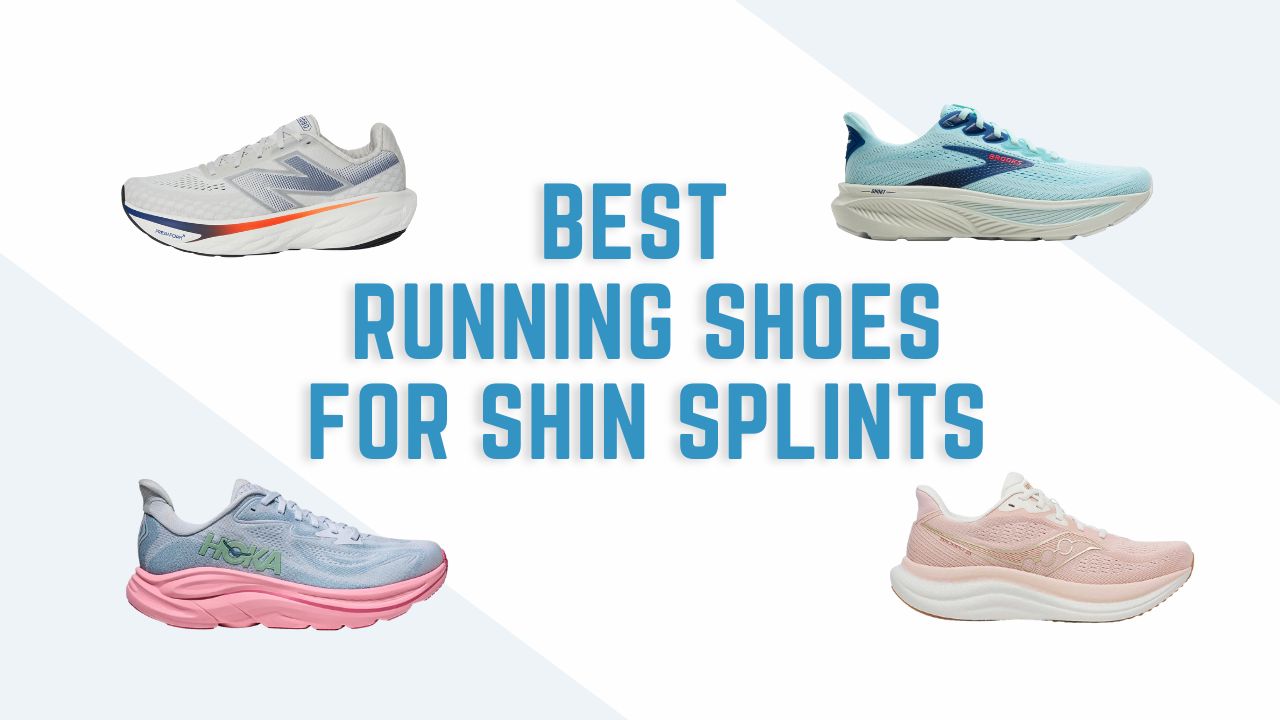
Luckily for you, we’ve put together ways you can prevent shin splints from happening, starting with the best running shoes for shin splints!
7 Best Running Shoes for Shin Splints
- Hoka Clifton 10
- Brooks Adrenaline GTS 25
- Saucony Triumph 23
- Brooks Ghost 17
- New Balance Fresh Foam 1080
- Asics Gel Nimbus 27
- Adidas EVO SL
7 Best Running Shoes for Shin Splints
Here are some shoes to help prevent or ease shin splints. I don’t have issues with shin splints and have run in pretty much all of these shoes!
They’re shoes that feel good and have the bonus of being great for your lower leg muscles.
Hoka Clifton 10
The Hoka Clifton is a shin’s best friend due to its amazing cushioning at every step of your gait.
The Clifton is a great option if you are prone to shin splints because it is a lightweight, max-cushioned, everyday trainer with a full-compression EVA midsole, an early stage Meta-Rocker, and an engineered mesh upper, and a heel that provides a comfortable and supportive fit.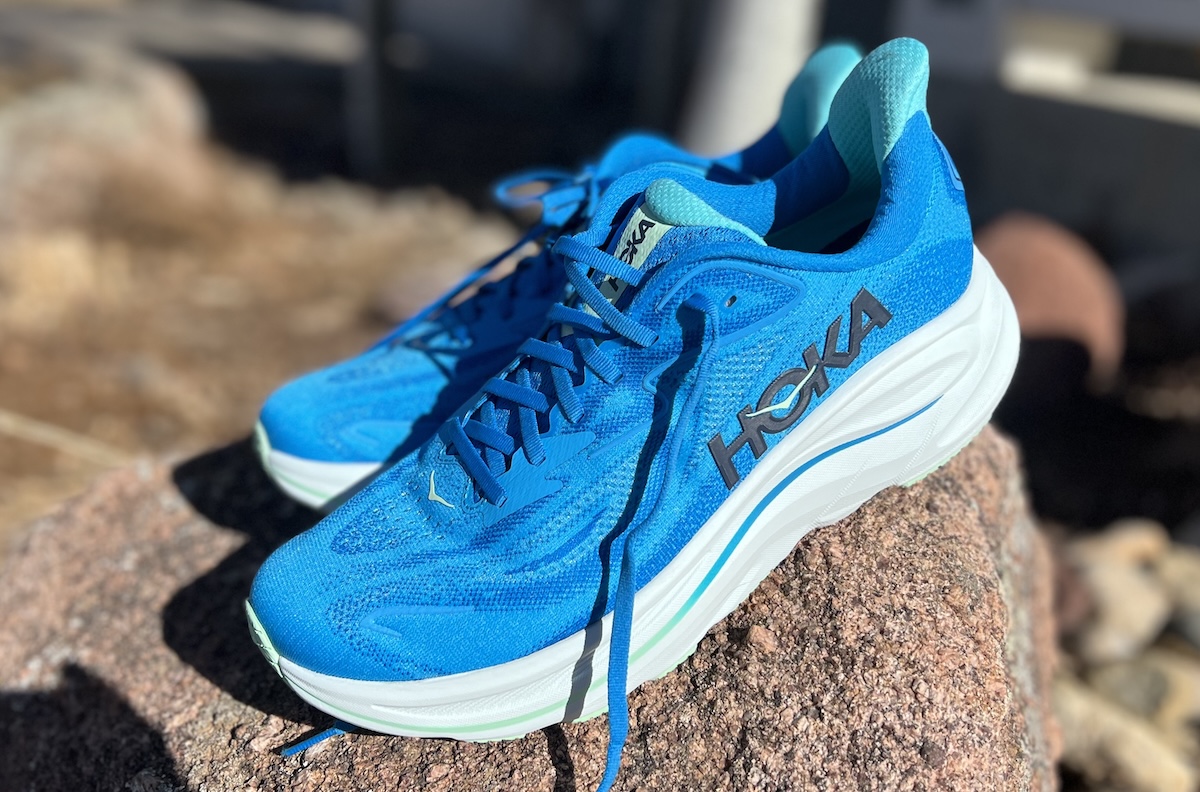 The Clifton is one of the best long-distance running shoes overall, and it is a great option for anyone who frequently has shin splints.
Once you experience the cushioning and support they provide, you won’t be able to imagine running without them. It’s a great neutral running shoe with good arch support and plenty of cushioning to help your body get used to the impact.
- Heel Drop: 8 mm
- Stack: 42 mm
- Weight: 9.8 oz men’s, 8.0 oz women’s
- Available in Wide (and extra wide in men’s)
- Available in 7 Colors
- Find it on Hoka.com for $150
- Read our full review of the Hoka Clifton 10 here >>
Read a comparison of the HOKA Clifton vs Bondi >>
Brooks Adrenaline GTS 25
The lightweight, breathable, and cushioned soles of the Brooks Adrenaline GTS running shoes help to reduce impact throughout each stride.
If your shin pains are caused by pronation control concerns, you need a stability running shoe (once you’ve done all the hip and glute work!).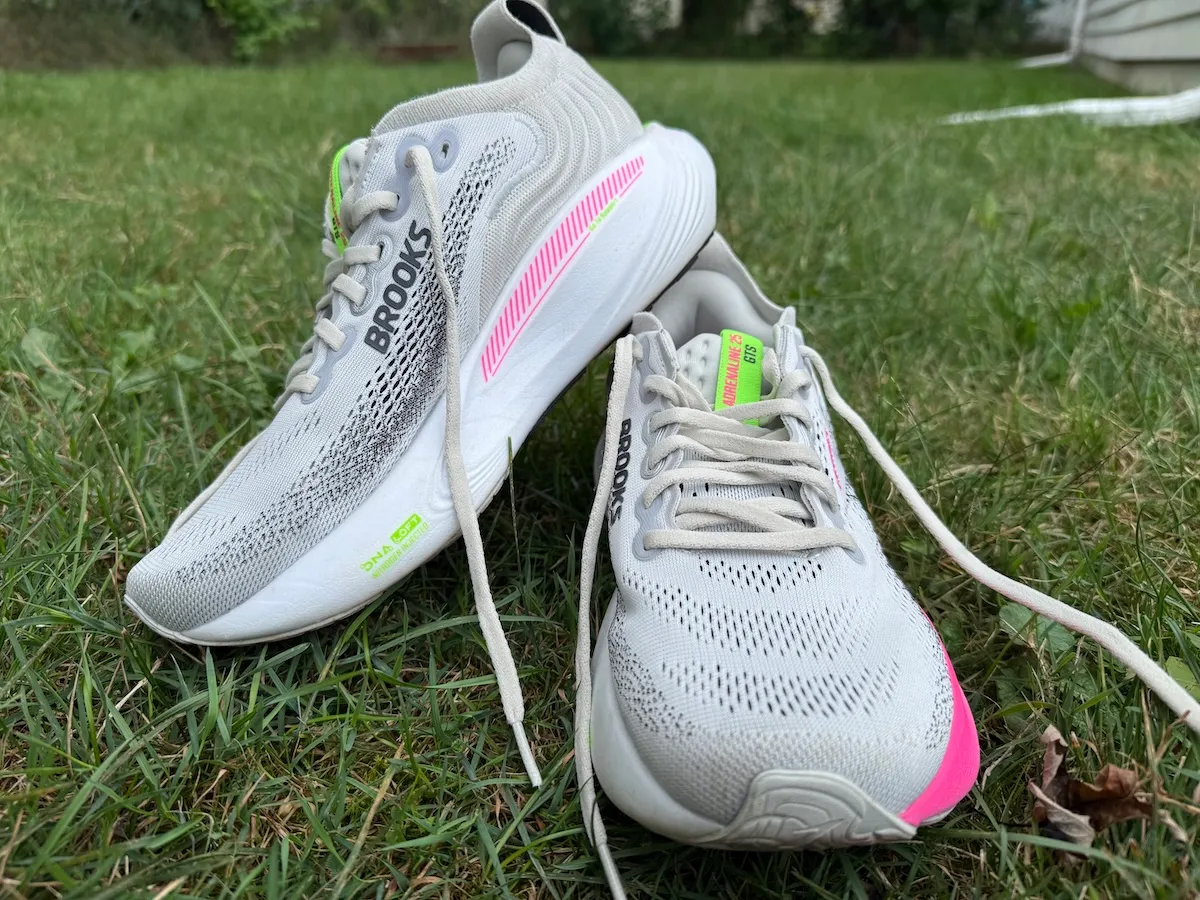
The Adrenaline range of running shoes is positioned in the middle of Brooks’ stability lineup, giving all-around support with the company’s trademarked ‘GuideRails’ in the heel to curb any over or under pronation.
This guide rails support system built into the Adrenaline GTS is a big part of its stability. They help you run properly and spread your weight evenly with each step.
Overall, the Brooks Adrenaline GTS is a great stability shoe that truly helps if your feet are rolling inward and thus overtaxing your muscles. Plus, it’s also got a good amount of cushion.
- Weight: 10.6 oz Men’s, 9.5 oz Women’s
- Stack Height: 37 mm
- Heel Drop: 10 mm
- Available in nine colors
- Available in wide or extra wide
- Available on Brooks Running for $155.00
- Read our full review of the Brooks Adrenaline GTS 25 here >>
Saucony Triumph 23
The Saucony Triumph offers the cushioning and shock absorption long-distance runners need to counter the pounding of pavement. This running shoe has a breathable mesh upper and is cushioned all over with Saucony’s PWRRUNPB™ foam.
The newest Triumph is lighter weight, which we were really excited about because it feels better. The result is increased flexibility in the toe-off, which is probably where it lessened some of the firmness or stiffness from last year.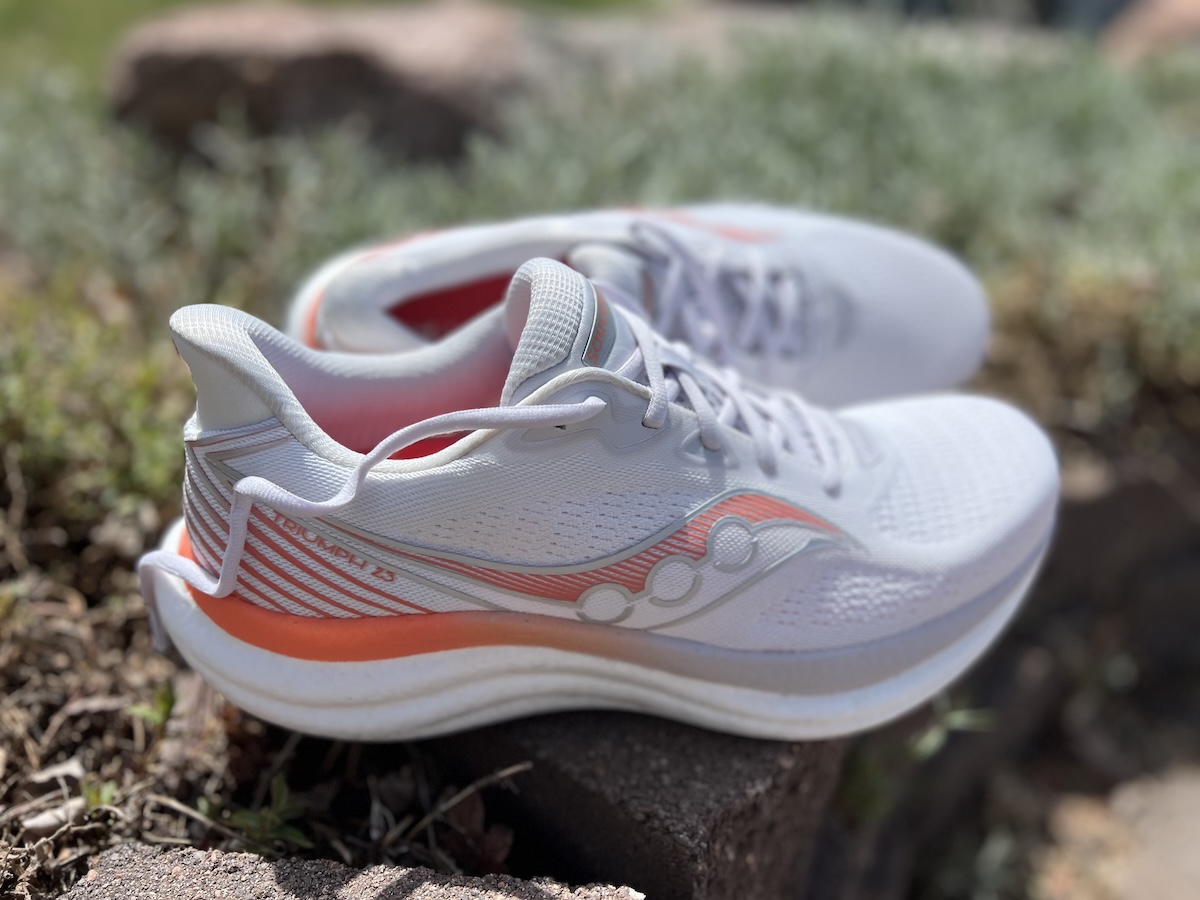
Saucony incorporates the PWRRUNPB™ plus midsole and a memory foam heel-counter to provide exceptional shock absorption, pressure distribution, energy return, and durability.
This gives you the plushest sensation and the best cushioning possible thanks to the use of ultra-soft fabrics and highly energized, springy foams.
This neutral shoe is also a good choice for runners who are naturally stable and want to start running again after an injury.
- Weight: 9.2 oz men’s, 8.4 oz women’s
- Heel drop: 10 mm
- Stack: 37 mm
- Available in 10 colors
- Available in wide
- Available now on Saucony.com $160
- Read our full review of the Saucony Triumph 23 here >>
Brooks Ghost 17
The Brooks Ghost is a great option for those seeking a stable, supportive running shoe.
The sneaker may not be the most aesthetically pleasing option, but if you’ve read my articles, you know that, as a running coach, I always recommend comfort and utility over style. The Ghost 17 is a great choice if you want to avoid or treat shin splints.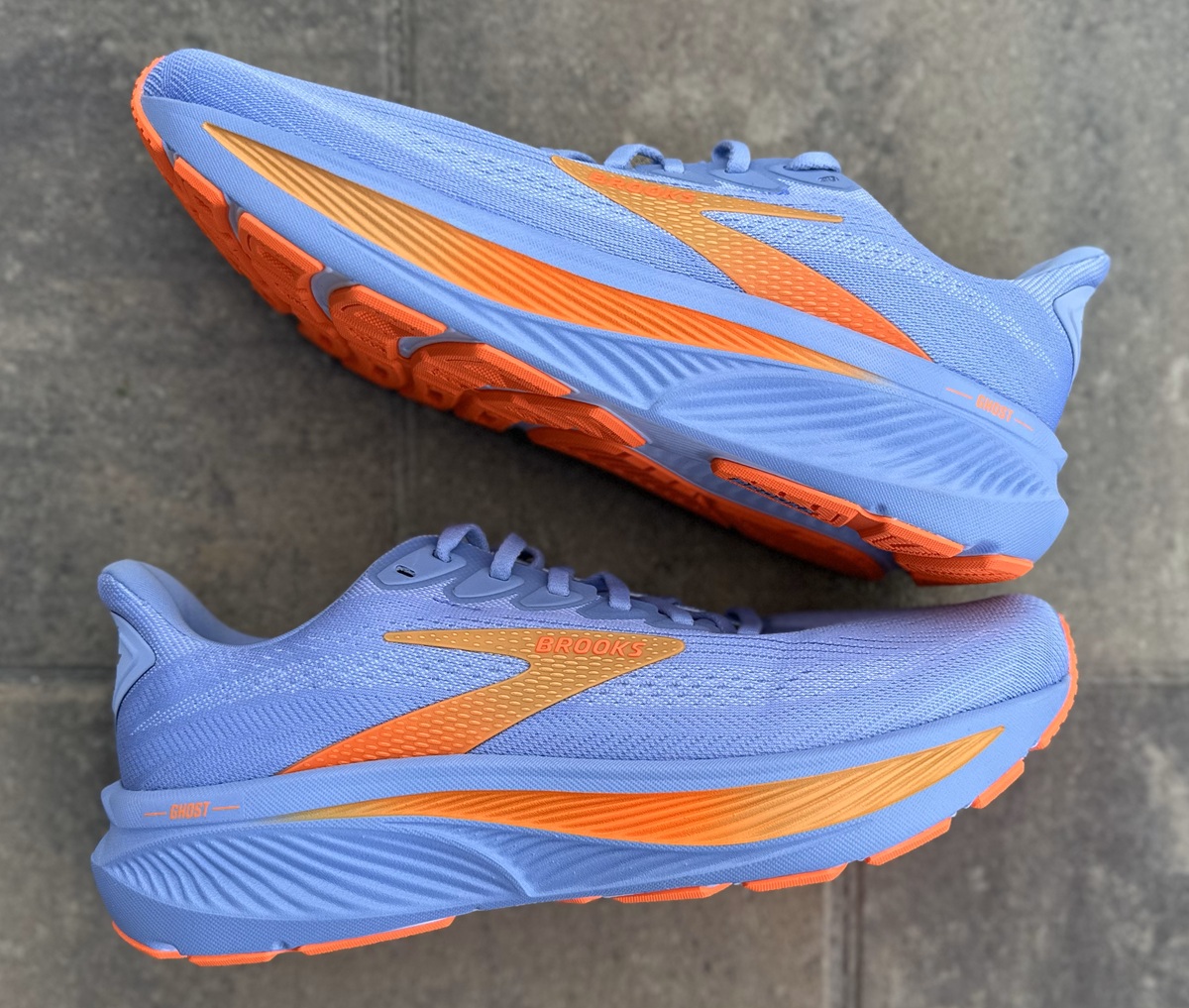
The Ghost series continues Brooks’ commitment to all-around great design, making it appealing to both casual and professional runners.
The Ghost 17 is a neutral running shoe now with a 10mm heel-to-toe drop. It’s not a huge difference, but if the 12 mm felt too high, you’ll really appreciate this.
If you’re a road runner who needs a shoe that takes good care of your shins, look no further than the Brooks Ghost. Runners who tend to land on their heels will find these shoes to be very helpful in preventing shin splints.
- Heel toe drop: 10mm
- Weight: 9.0 oz women’s, 10.1 oz men’s
- Stack: 36 mm
- Available in six colors
- Available in Wide, Narrow and Extra Wide in select colorways
- Available from Brooksrunning.com for $150
- Read our full review of the Brooks Ghost 17 here >>
New Balance Fresh Foam 1080
The New Balance Fresh Foam 1080 running shoe is the best option if you have wide feet and need a high-quality, cushioned, and durable shoe. Just be sure to order it in WIDE!
I recommend these shoes a lot because they feel fantastic and are great for so many different runners.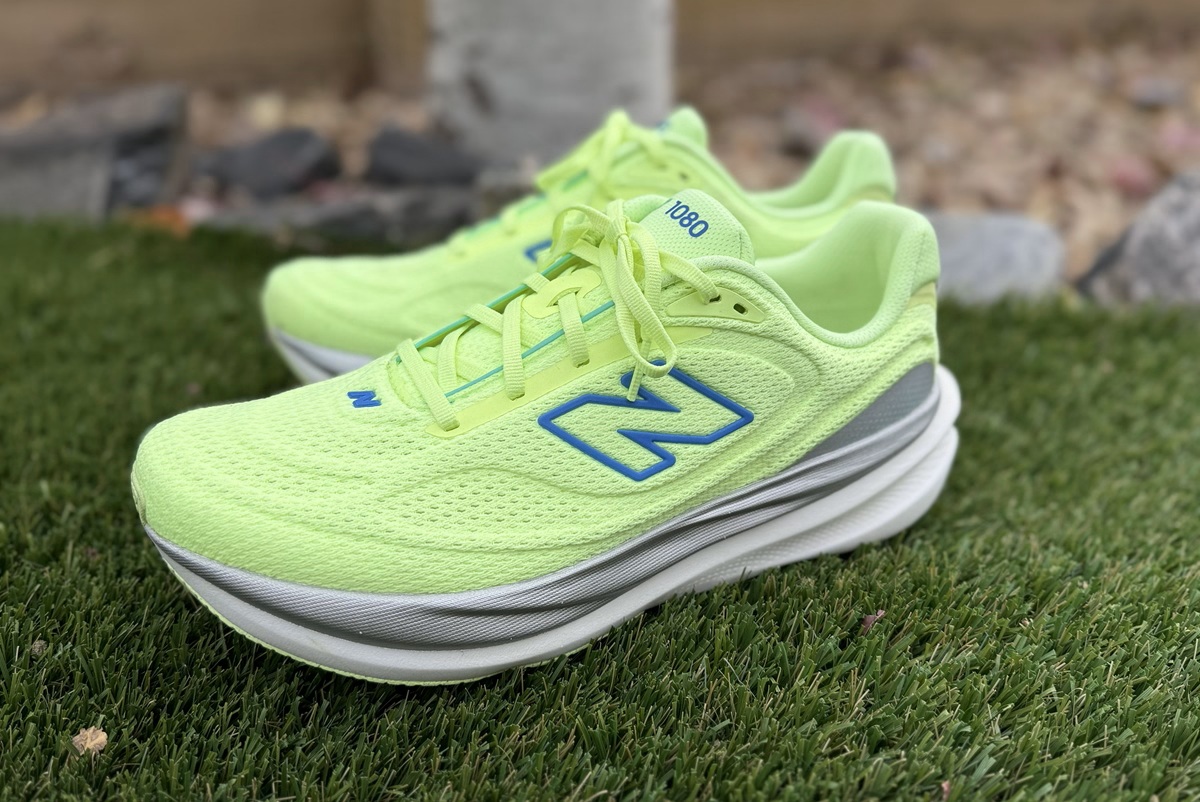
The shoe’s innovative one-piece Fresh Foam midsole gives great support and cushioning, and the dual-density rubber outsole gives even more stability.
For people who have suffered from shin splints, finding a pair of shoes with a flexible upper and a wide toe box is essential.
There are four widths for the running shoe: narrow, standard, wide, and extra-wide, giving you all the options you’ll need to find the right fit.
- Heel Drop: 6 mm
- Stack: 40 mm
- Weight: 9.5oz men’s, 7.3 oz women’s
- Available in Wide (and extra wide in men’s)
- Available January 15, 2026 for $170
- Checkout the current available 1080 models (and 100% we think the savings are worth buying now instead of waiting).
Asics Gel Nimbus 27
The iconic Asics GEL Nimbus running shoes are a great choice for distance runners or anyone who spends a lot of time on their feet and has shin pain. They are extremely flexible, supportive, and comfy.
Their signature GEL cushioning system in the heel and forefoot absorbs shock, resulting in more enjoyable miles. The shoe also features FlyteFoam Midsole Technology to enhance comfort, while the heel counter provides additional heel support.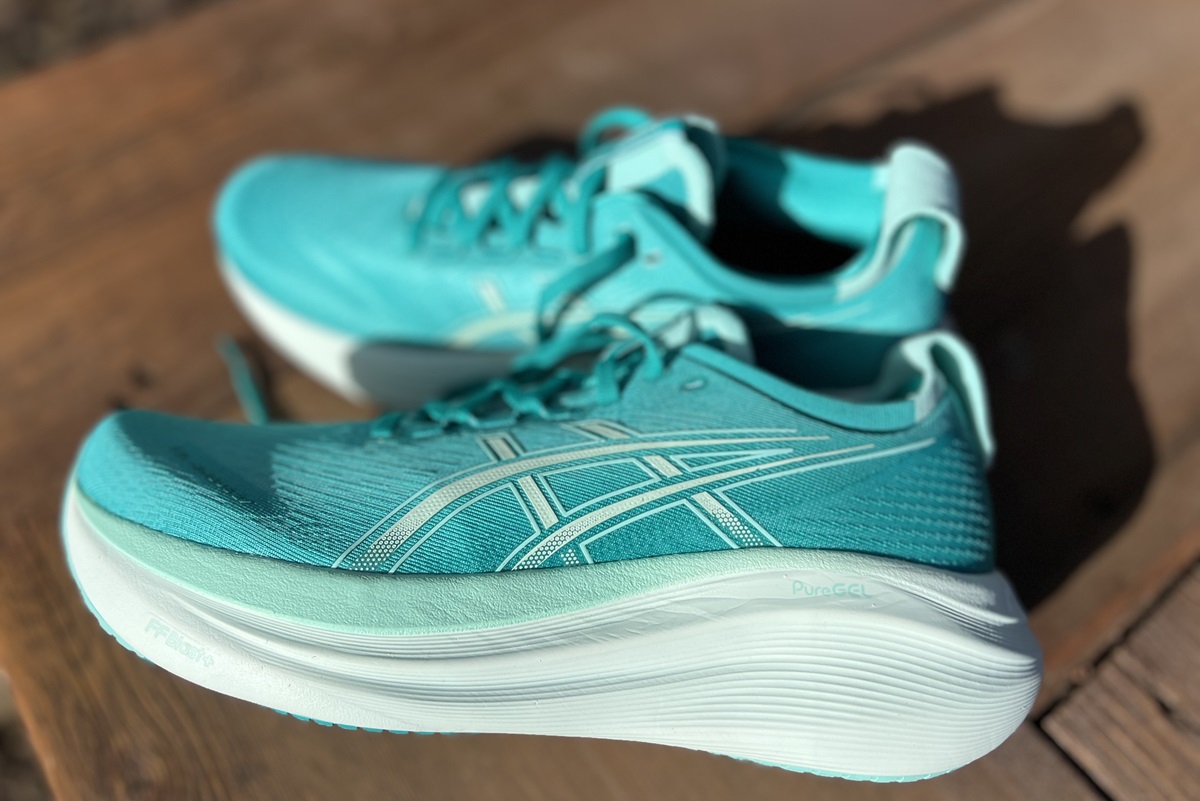
The Nimbus is different because it has a technology called Impact Guidance System (IGS) that is meant to improve a runner’s natural gait. Since improper running form is frequently to blame for shin splints, this can be a game-changer for people suffering from shin splints due to this.
These are truly solid all-around shoes that will feel great right out of the box, whether you’re a marathoner in training or just a casual runner.
- Heel toe drop: 8mm
- Weight: 9.2 oz women’s, 10.7 oz men’s
- Stack: 42.5 mm
- Usage: Recovery or long run shoe
- Available in four colors
- Available at Asics.com and RunningWarehouse.com $165
- Read our full review of the Asics Gel Nimbus 27 here >>
Adidas EVO SL
This is going to be the perfect shoe to carry you through long runs, while still allowing you to pick up the pace for half and even full-marathon miles.
You’re not going to find all the fancy bells and whistles packed into the midsole, just some nice foam underfoot.
The EVO SL isn’t overly soft or unstable, so there’s less stress on the lower legs. It’s a lightweight shoe, and the energy return on a long run is really fabulous for the legs, helping prevent shin splints. 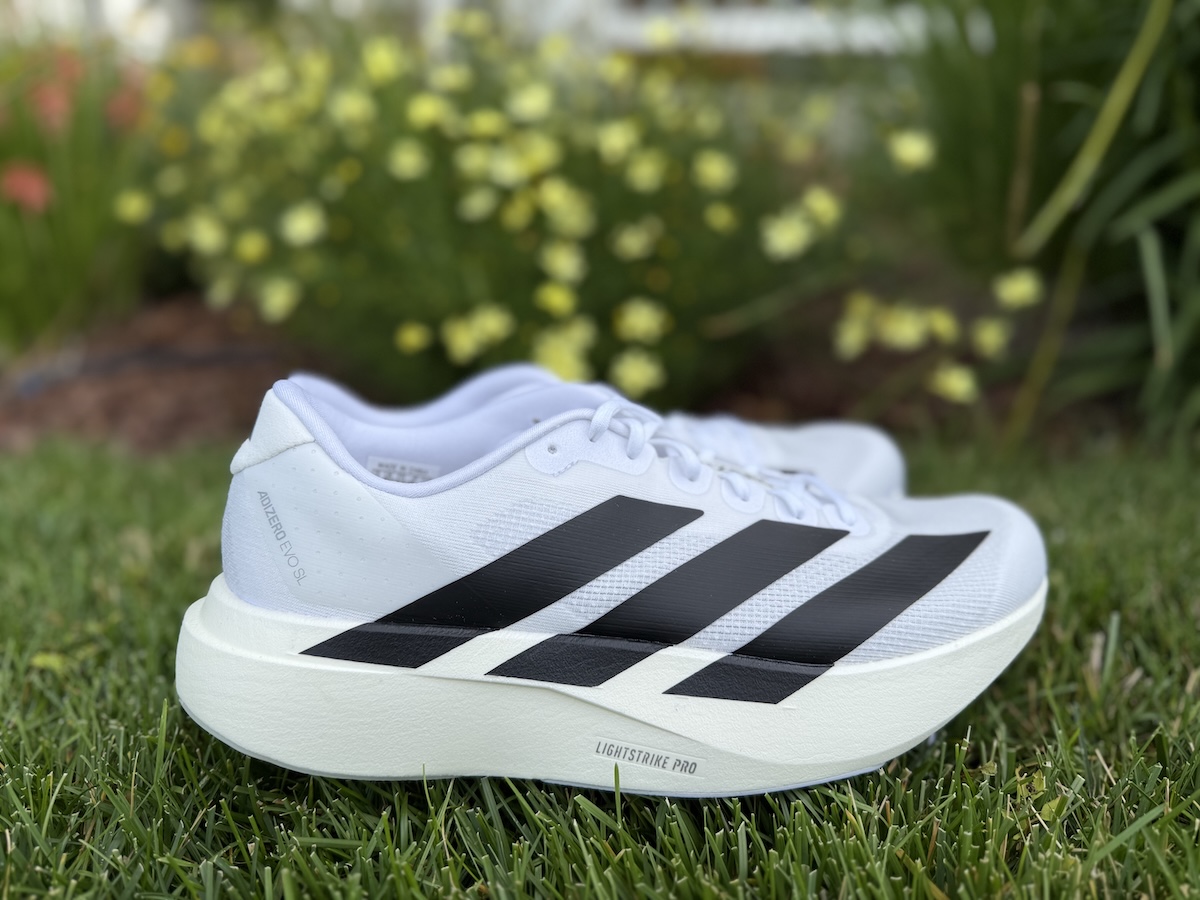
While we’re not reaching for this shoe on the days we want to do 7:00-minute repeats, we did enjoy it on longer miles where we wanted to put in some pick-ups.
- Weight: 7.9 oz Men’s, 6.6 oz Women’s
- Heel drop: 6 mm
- Available in 7 colors
- Available in wide
- Available now on adidas.com for $150
- Check out our full review of the Adidas EVO SL here >>
How Do I Know If I Have Shin Splints?
No matter how often you run or how well you train, you’ve probably heard of shin splints.
Shin splints, also known as medial tibial stress syndrome, are pain along the front of your lower leg brought on by repeated stress that overworks the tendons, muscles, and tissue that surround your shinbone, resulting in inflammation and pain.
And it’s not a subtle pain; it’s in your face, letting you know something is wrong.
- Pain along either the front or the side of your lower leg
- Pain that appears each time you try to run, and eventually just walking
- Can have some minor swelling
The location of the pain is largely dependent on your running form. Some people will notice it more on the inside, others the outside and some all over.
Shin splints can be caused by several factors, such as overpronation of the foot and ankle, poor training habits, and even tight calves.
If you’ve found yourself asking, “Why do I always get shin splints?”, then these tips will help you keep running and ditch the pain.
How To Prevent Shin Splints
Shin pain from running is the result of overuse. They’re caused by repeated strain on the calf muscles, especially the anterior muscles along the shin bone.
So if you’re just starting out or kicking your training up a notch, use these tips to avoid shin splints.
- Don’t ramp up miles or intensity too quick
- Change where you run
- Get shoes for shin splints
- Rest those muscles
- Add a few shin splint stretches
Shin pain when running is avoidable! Read on to put it to an end.
Like most of the obstacles that will surface during your life as a runner (and there will be many), there are plenty of ways to treat shin splints before they get out of hand and derail your running schedule.
There’s shin splints prevention and shin splints recovery—and you can (and should) try both.
1. Start Slow
Weekend warriors beware. The easiest way to get shin splits is logging too many miles too quickly.
Shin splints are the most common injury for new runners.
If you’ve never run before (or you’ve never run that FAR before), hitting the pavement for a bunch of miles every day right off the bat puts you at risk.
Even if your cardiovascular system, your heart and lungs, can handle the workload, your legs are absorbing the strain.
- 10% rule is what we often cite for how quickly to add mileage
- Consider following a Couch to 5K plan which will ease you in to the miles
- Remember to warm up before each run to loosen muscles

2. Find Softer Running Surfaces
Pavement is tough on your body.
The impact of your feet pounding hard pavement puts stress and strain on your muscles, bones, and joints. Yet, it’s tough to find an alternative to running on pavement (especially if you live in the city), but I promise they’re out there.
Treadmills, for example, can put less strain on your shins than running on the pavement because of the give in the deck.
Trail running on dirt and beach running on sandy surfaces are also lower impact. (Bonus points for the great scenery! Minus points because it provides different ways to injure yourself.)
3. Rest Overworked Muscles
Rest is vital to avoiding injury, especially if you’re a newbie runner. I know many runners fight and fuss over the idea of rest. After all, we’re runners, we like to MOVE, right?
Shin splints from running, however, are one of the few injuries where rest is the first step.
Usually, I want you to start with strength work, but here you have to rest that inflamed muscle.
You CAN spend time stretching and working your upper body! No need to stop the momentum.
- Heat is useful to loosen the tight muscles
- Foam roll your tight calves and quads – do not roll your shins right now
4. Shin Splints Stretches
Does stretching help shin splints? Yes.
But the focus is less on stretching your shins for the most part; we’re stretching tight muscles that are pulling on them. Calf stretches can help you avoid shin splints.
Try dynamic stretches with a resistance band before your run (to warm up your muscles) and static stretches (to relax and restore) afterwards.
These are stretches you want to hold for at least 30 seconds, but up to 2 minutes
- calf stretch with band – seated loop a band around the middle of the foot and then pull back to feel the stretch in the calves
- heel walks – lift up your toes and walk forward and backward on your heels
- toe walks – get up on your toes and then walk forward and backward
- stair heel drop – standing with toes on a stair, allow your heels to drop below and hold the stretch
- kneeling shin stretch – see photo above you are kneeling with feet flexed
Once the inflammation is gone, you can foam roll your shins prior to running to help loosen up the muscle and get blood flowing!
5. Wear Compression Socks
Compression socks may help you heal faster. They help in boosting blood flow to the muscles in the lower legs. Inflammation is reduced when there is increased blood flow and oxygen to them.
According to research, compressing the tibia and the soft tissues around it may also promote bone development.
6. Use the Right Shoes
I can’t begin to stress how important the right shoes are to healthy running. You may even want to rotate shoes (as I do), which greatly reduces your risk for injury.
Finding the right running shoes is crucial to avoiding shin splints primarily because their role is to minimize the stress put on your calf muscles.
You’ve already made a few of the above mistakes and found yourself with an ache you can’t ignore and a burning desire to get back to your running.
Check out these 5 tips for shin splints treatment >>
What to read next?
- Best Bodyweight Workout Moves for Runners: Complete Guide
- 10 Best High Drop Running Shoes | Ideal for Achilles Or Ankle Mobility Issues
- Dr. Lisa Mitro: Why Most Runners Treat Plantar Fasciitis Wrong (And What Works)
Other ways to connect with Amanda
Instagram Daily Fun: RunToTheFinish
Facebook Community Chatter: RunToTheFinish
Sign Up to Receive a Weekly Newsletter with Top Running Tips
The post Best Running Shoes for Shin Splints + 6 Tips to Prevent It appeared first on RunToTheFinish.
from RunToTheFinish https://ift.tt/RwZjzt1
Post a Comment
Post a Comment