Our testing team put in the miles so that we could give you a list of the best non-plated race-day shoes. While carbon might be prevalent in the front of the pack, they aren’t a requirement to run your fastest race and might not even be right for your stride.
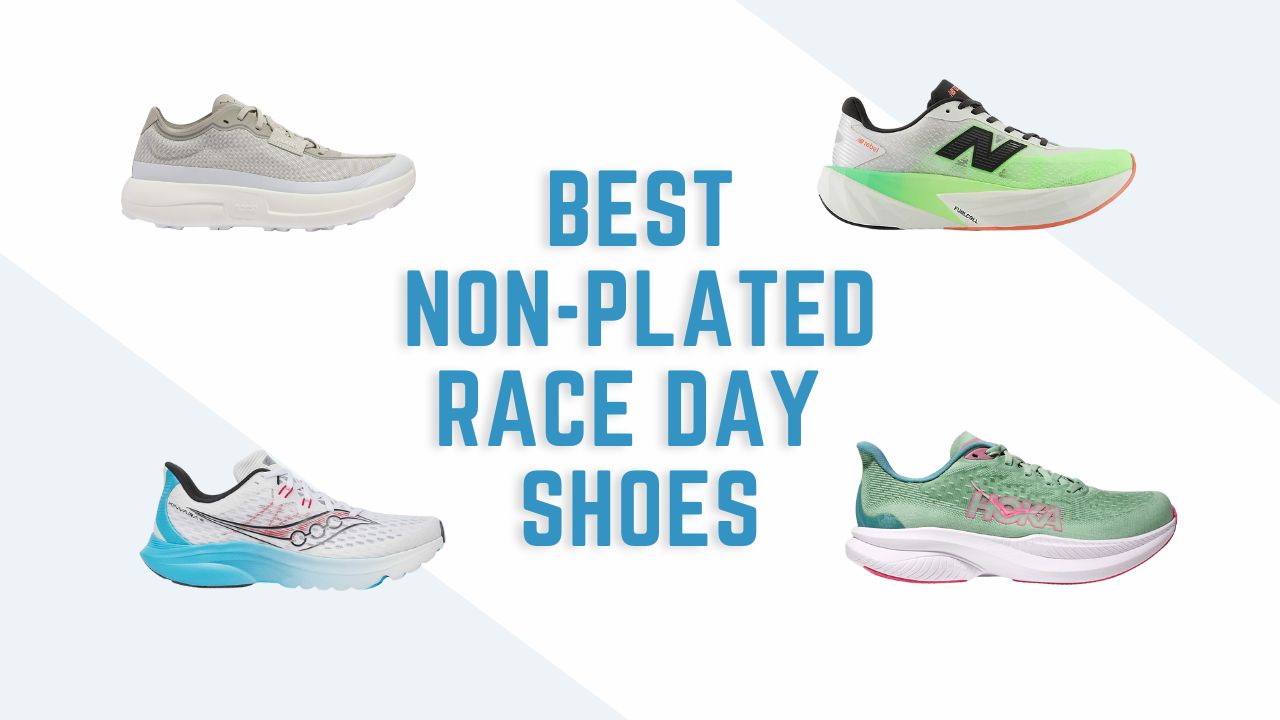
Choosing the right pair of shoes for speed and race day truly matters. The wrong pair of shoes can potentially cause issues like ankle pain while running or knee pain while running.
When looking at and trying on a shoe here’s a few things to pay attention to:
- has enough room in the toe box for your feet to spread and potentially swell over the miles
- allows you to change the lacing to provide more room or lock in your heel
- keeps your arch from dropping in which places pressure on knees and ankles
- made with cushioning that isn’t too plush, so you’re not sinking into the ground and getting lower back pain
So how do brands design shoes without a carbon plate that still have that bouncy feel? It all comes down to the different types of foam.
In our list of non-plated race-day shoes below, we’ve tried to incorporate a variety of foams so there’s guaranteed to be a shoe that fits the “feel good” category for every runner.
12 Best Non-plated Race Day Shoes
- New Balance FuelCell Rebel v5
- Nike Pegasus 41
- Brooks Ghost
- Saucony Kinvara
- Adidas EVO SL
- Asics Superblast 2
- Asics Megablast
- Topo Cyclone
- Altra Torin 8
- Nike Terra Kiger 10
- Norda 005
12 Best Non-plated Race Shoes
Race day shoes are simply the pair that allow you to pick up the pace and feel comfortable. The right foam, cushion and support can make a big difference in energy expenditure. As in some shoes return more energy where others with a softer foam absorb more energy.
These are our team’s go-to recommendations for every distance from the 5k all the way to the marathon. Whether you’re middle or back of the pack, these shoes will give you the comfort and support you need to get to the finish line smiling.
👉Lightweight and Multi-distance Shoe – Saucony Kinvara
This has been one of Amanda’s go-to shoes for nearly a decade, and you’ll often find it on so many of our best-of lists.
The Saucony Kinvara 16 feels smooth and stable. If you want to pick up the pace in these, absolutely go for it! The PWRRUN foam is going to provide even more energy return, really giving the snappier feel underfoot.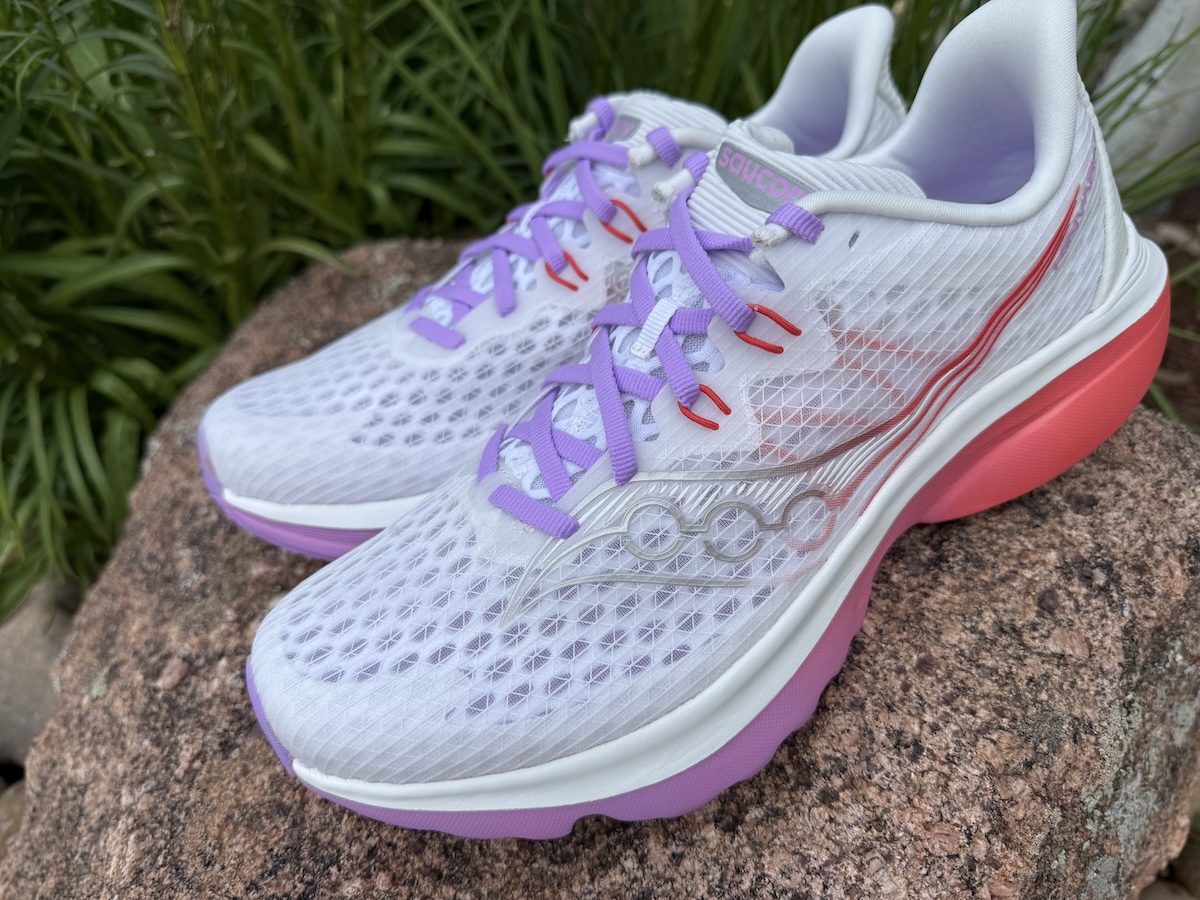
It features Saucony’s PWRRUN midsole foam. The foam is a proprietary blend that adapts to a runner’s unique stride, providing customized cushioning and support.
The Kinvaras provide comfort while still allowing you to pick up the pace without your legs feeling fatigued early in your run or race.
- Weight: 7.0 oz men’s, 6.3 oz women’s
- Heel drop: 4 mm
- Available in 9 colors
- Available in wide
- Available now on Saucony.com ($130)
- Read our full review of the Saucony Kinvara 16 here >>
👉Speedy and Shorter Race Efforts – New Balance FuelCell Rebel v5
Okay, so we haven’t been really happy with the last few models of the Rebel but we’re so excited with the v5 that we think it’s going to make a great “let’s run fast” shoe.
The New Balance FuelCell Rebel v5 is a fun lightweight trainer and tempo shoe.
While the ability to tear through speedy track workouts may be a thing of the past for the Rebel, it is still an excellent non-plated lightweight daily trainer, tempo shoe, and affordable racing shoe for anything from the 5K to the half-marathon.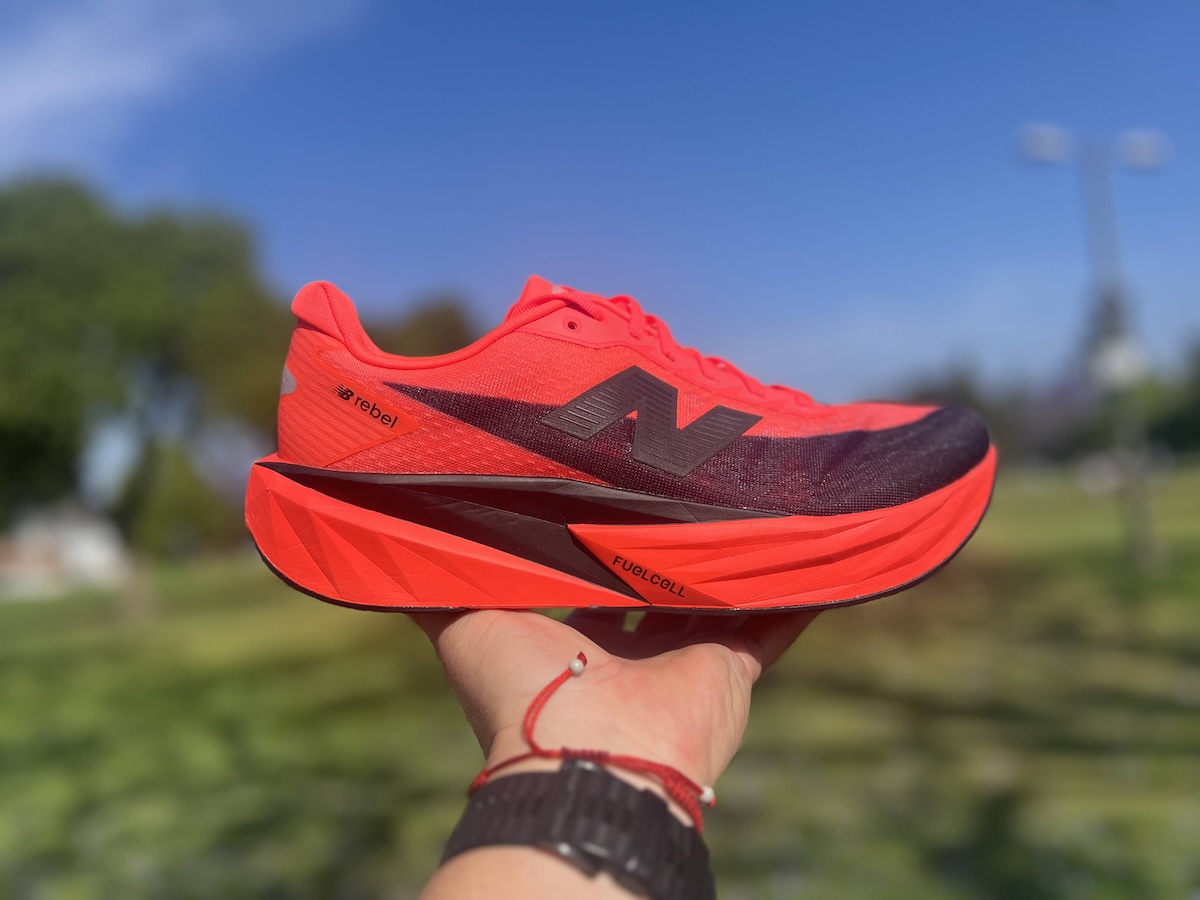
This shoe is known for its energy return, with the V5 being even more responsive than the previous version. It could be a good option if you struggle with issues like plantar fasciitis because it’s not as soft as others.
-
- Weight: 6.3 oz Women’s, 7.9 oz Men’s
- Heel drop: 6mm drop
- Available in wide sizes
- Available in 8 colors
- Check it out at Newbalance.com for $140
- Read our full review of the New Balance FuelCell Rebel v5 here>>
👉Best Max Cushioned Fast Shoe – Asics Superblast 2
The Asics Superblast 2 is a non-plated super trainer that’s incredibly light for the max cushion and for sure to be a great race day option for many runners.
While labeled a “super trainer”, the reality is these shoes are fantastic for long runs and race day for the middle to back of the pack runner.
Asics designed this shoe using 2 types of foam in the midsole, Flytefoam Turbo Plus on the top later and Flytefoam Blast Plus Eco bottom layer. This combo is going to provide a soft yet responsive feel, helping to absorb impact.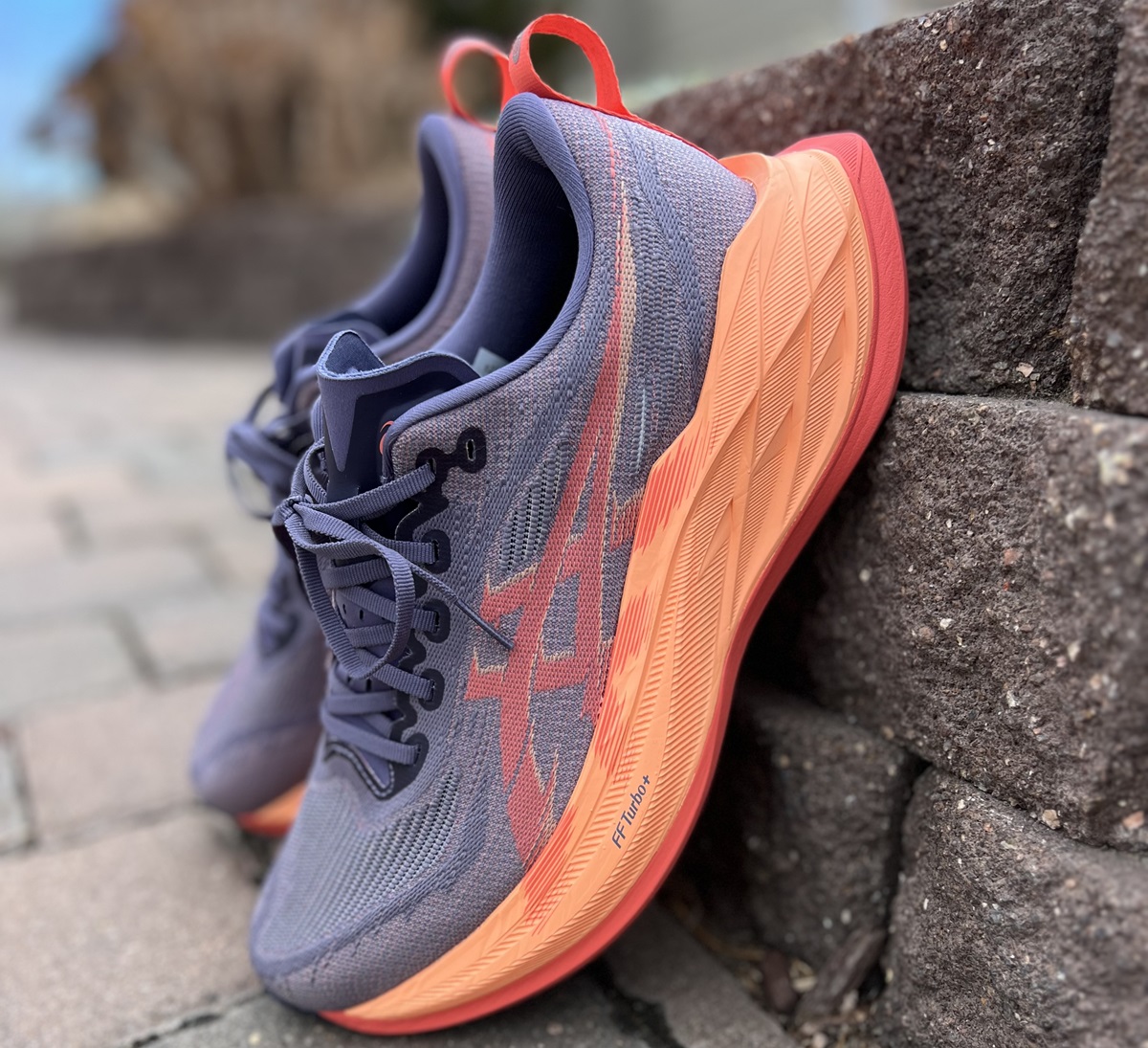 Not only will this be a great 4-5 hour marathon shoe, it’s a great shoe for our heavier and taller running friends!
- Weight: Unisex sizing 8.8oz
- Heel drop: 8mm
- Not available in wide
- Available in 4 colors
- Available at Asics.com $200
- Read our full review of the Asics Superblast 2 >>
👉Covers Race Day Paces for All Distances – Hoka Mach 6
When you’re ready to turn on the speed, the Mach is your HOKA of choice. It’s not a carbon fiber shoe; instead, it’s a lightweight shoe designed to spring off the ground and help you find that quick turnover. And yet somehow it’s still got a nice amount of cushion, so it can go the distance.

This shoe is best for runners who are looking for a fast and responsive shoe to take on long-distance races or interval training. Whether you’re racing a 5k or the half marathon, you’ll get the support that you need from the Mach 6.
The Mach features a lightweight foam midsole that provides a quick, lively feel, while the meta-rocker design helps to encourage a more natural gait.
- Weight: 8.2 oz Men’s, 6.8 oz Women’s
- Heel Drop: 5 mm
- Available in 9 colors
- Available in Wide in some colors
- See all HOKA Mach models $140
- Read our full review of the Mach 6 here >>
👉Best Light Higher Drop Option – Nike Pegasus 41
A lot has been said about the Vaporfly 4, but they aren’t the shoe I’d recommend for most runners. While carbon fiber is exciting, the price point is higher, and all that cushion significantly reduces stability, which could lead to injury.
The Pegasus uses the Nike React foam midsoles that are not only lightweight but also springy and durable. Rather than feeling bouncy, this is just a nice amount of cushion that allows you to still get a quick rebound off the ground. The breathable mesh upper provides a great neutral fit that should work well for many runners.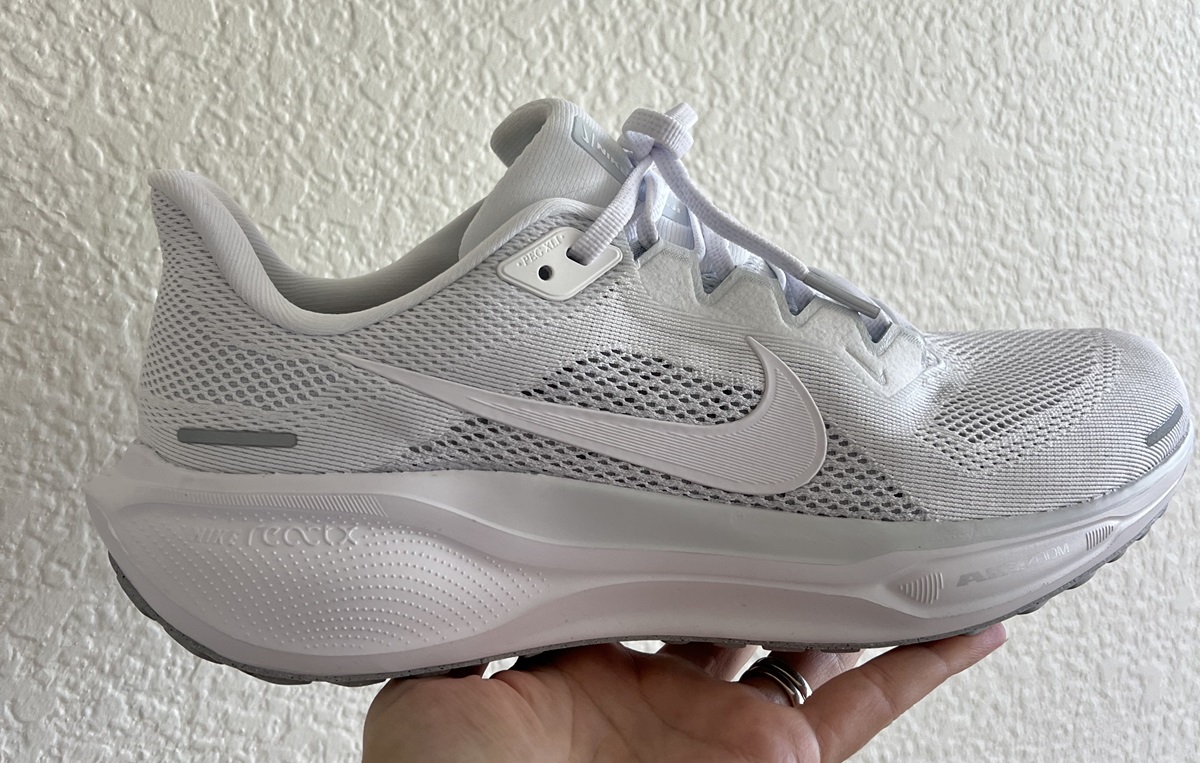 The Pegasus also features a wider toe box for more room while its curved collars help reduce irritation to the Achilles tendons. I definitely understand why this shoe has made it to model 41 and is so extremely popular.
- Heel drop: 10mm
- Weight: 10.4 oz men’s, 8.6 oz women’s
- Available in 19(!!) colors
- Available in Extra Wide
- Find it here on Nike.com for $140, so you can enjoy their 30 day trial policy!
- See complete Nike Pegasus 41 Review >>
👉Well Priced Bouncy Shoe for Mid-Pack – Adidas EVO SL
This may look like a super fancy shoe, but don’t let that fool you. The EVO SL is going to be perfect for carrying you through long runs, even 26.2 miles.
It’s not as bouncy as a carbon-plated shoe, nor as soft as a daily trainer. It’s a blend right in the middle that allows for that energy return, while still feeling really good underfoot.
The Lighstrike Pro is their top-of-the-line foam and will support you as things may get a little spicy picking up your goal pace.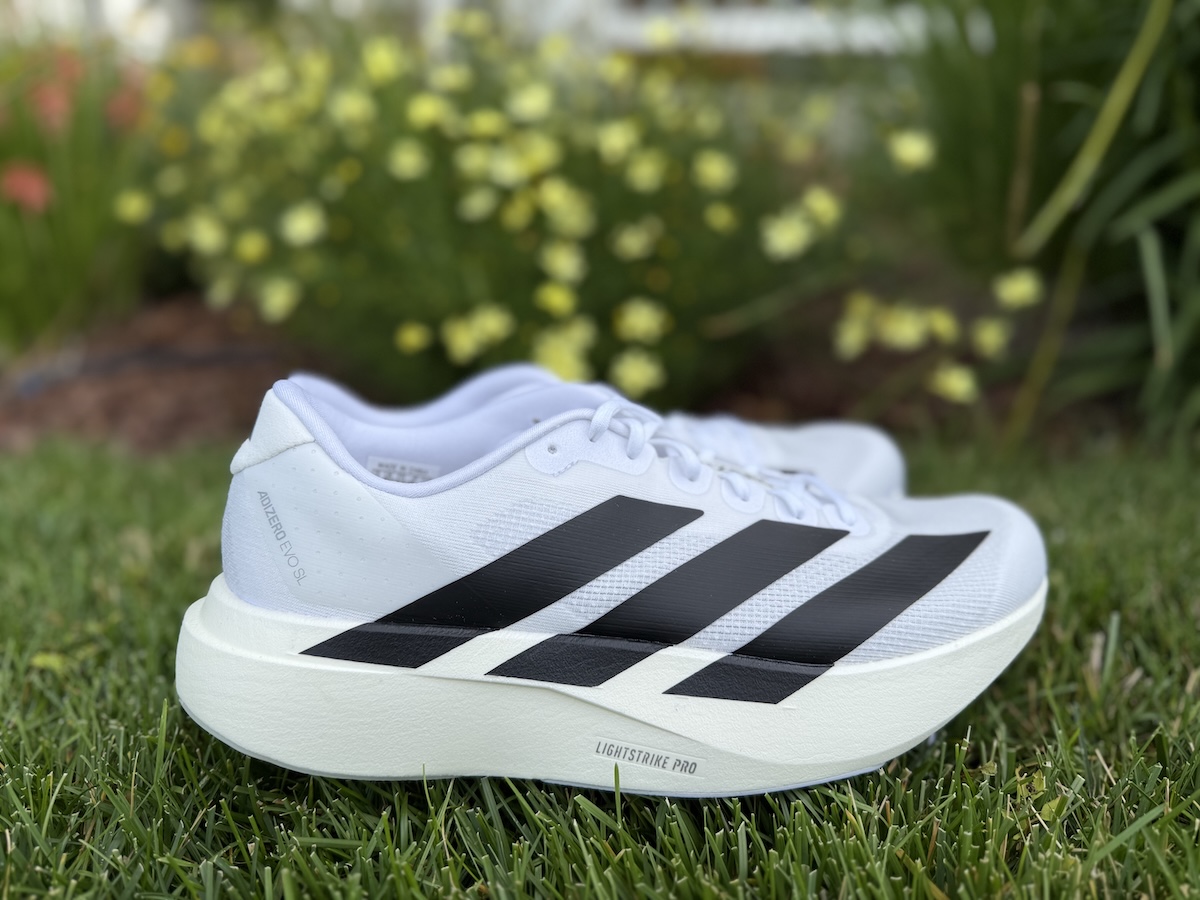 While running a marathon, a lightweight, energy-returning shoe is a fabulous choice for the legs, no matter the pace.
- Weight: 7.9 oz Men’s, 6.6 oz Women’s
- Heel drop: 6 mm
- Available in 7 colors
- Available in wide
- Available now on adidas.com for $150
- Check out our full review of the Adidas EVO SL here >>
👉The 5-hour Marathon Shoe – Asics Megablast
A max cushioned race day shoe that’s guaranteed to add springiness to your stride. Yep, you read that right.
This is the shoe you want when you’re putting in some longer miles or on those days when you’re playing with speed. No, we don’t all need or want a plate. The foam plays a massive role in a shoe’s ability to pick up the pace, and you’ll find that here.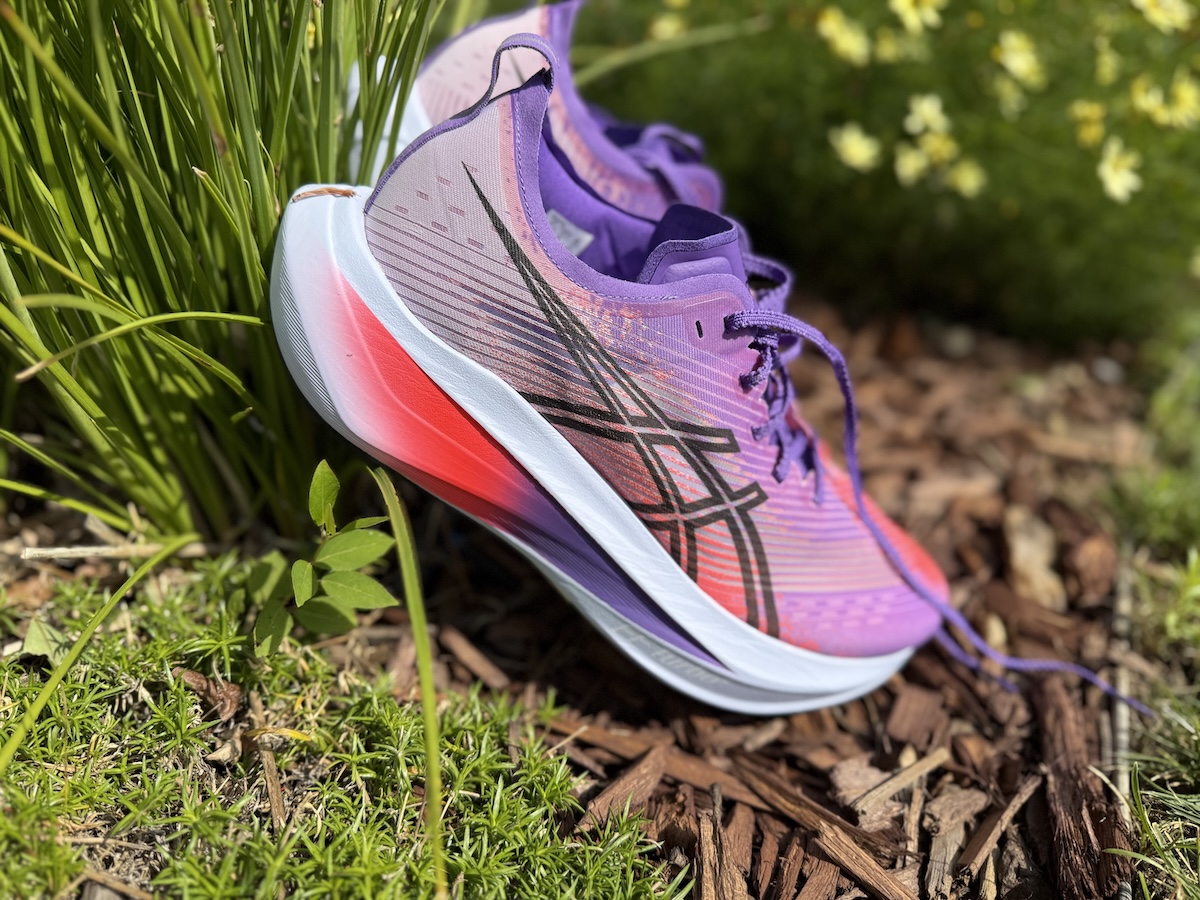
You’re not going to feel like you’re sinking into the shoe or losing energy because of its softer foam. We promise you’ll be pleasantly surprised by how good it feels when you pick it up at goal pace.
- Weight: 8 oz (note actual weights are coming in lighter than specs list)
- Heel Drop: 8 mm
- Available in 2 colors
- Not available in Wide, Unisex fit
- Available on Asics.com for $225
- Read our full review and comparison of the Asics Megablast here >>
👉Long Time Favorite Non-Plated Marathon Shoe – Brooks Ghost
The Brooks Ghost 17 still delivers everything a runner could ask for: just the right amount of midsole cushioning, a durable rubber outsole, and a breathable mesh upper to keep your feet comfortable mile after mile.
Is it meant to be a fast shoe? No. It’s a daily trainer, but doesn’t hold you back.
Just like with the Asics Kayano, the Ghost has been around for a while because it works for so many folks and is durable. Yes, some models we didn’t absolutely love, but we think this one checks all the boxes for the longer distances.
These feel like a shoe with a lot more structure, and while cushioned, they don’t have the plush feel of some shoes. It’s a mix between soft and firm, like a shoe that you’d throw on when you want to hit party paces, but you also want to be able to get down to business.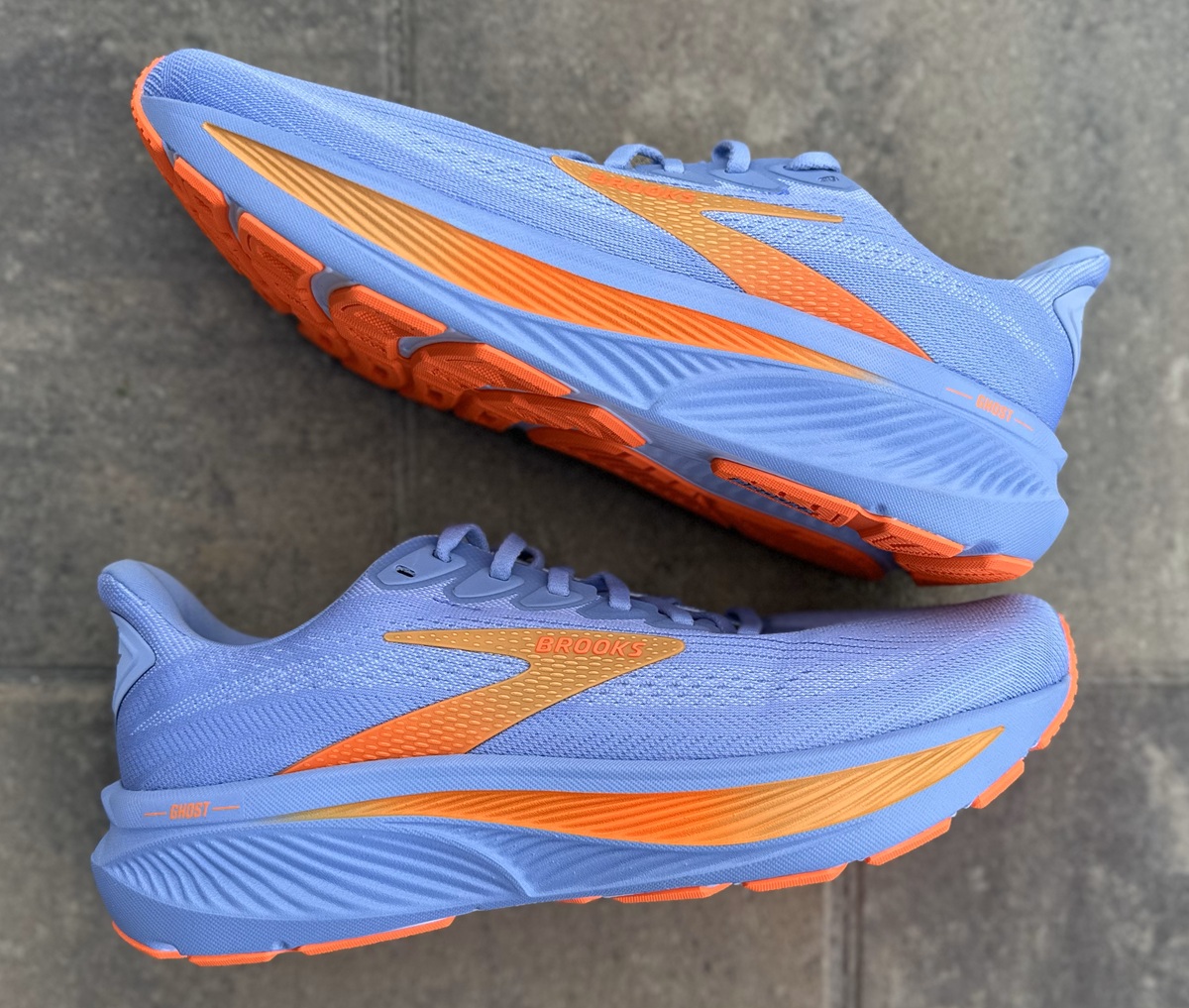 They kept the same DNA Loft v3 foam but added more nitrogen to the heel and forefoot to give a little more pop and a softer feel underfoot. Now, there’s not enough pop that you’d grab these for a speed workout, or if you’re looking to run something like a fast 5k. Longer distances, though? Absolutely sign us up!
- Heel toe drop: 10mm
- Weight: 9.0 oz women’s, 10.1 oz men’s
- Available in six colors
- Available in Wide, Narrow and Extra Wide in select colorways
- Available from Brooksrunning.com for $150
- Read our full review of the Ghost 17 here >>
👉Best Lightweight Wide Toe Box Option – Topo Cyclone
The Topo Cyclone feels great from the moment you slip it on for the first time, and you’re going to love how light, responsive, and fun it is to take out on the road.
It’s an uptempo trainer, great for pushing speed limits on race day during those shorter distances.
The light mesh upper is fitted through the midfoot and felt great as we picked up the pace. It’s stable and your heel stays in place even with Topo’s signature wider toebox.
The heel collar is plush and comfortable, and the tongue is flexible; all in all, this shoe will stay in place even as you amp up the speed.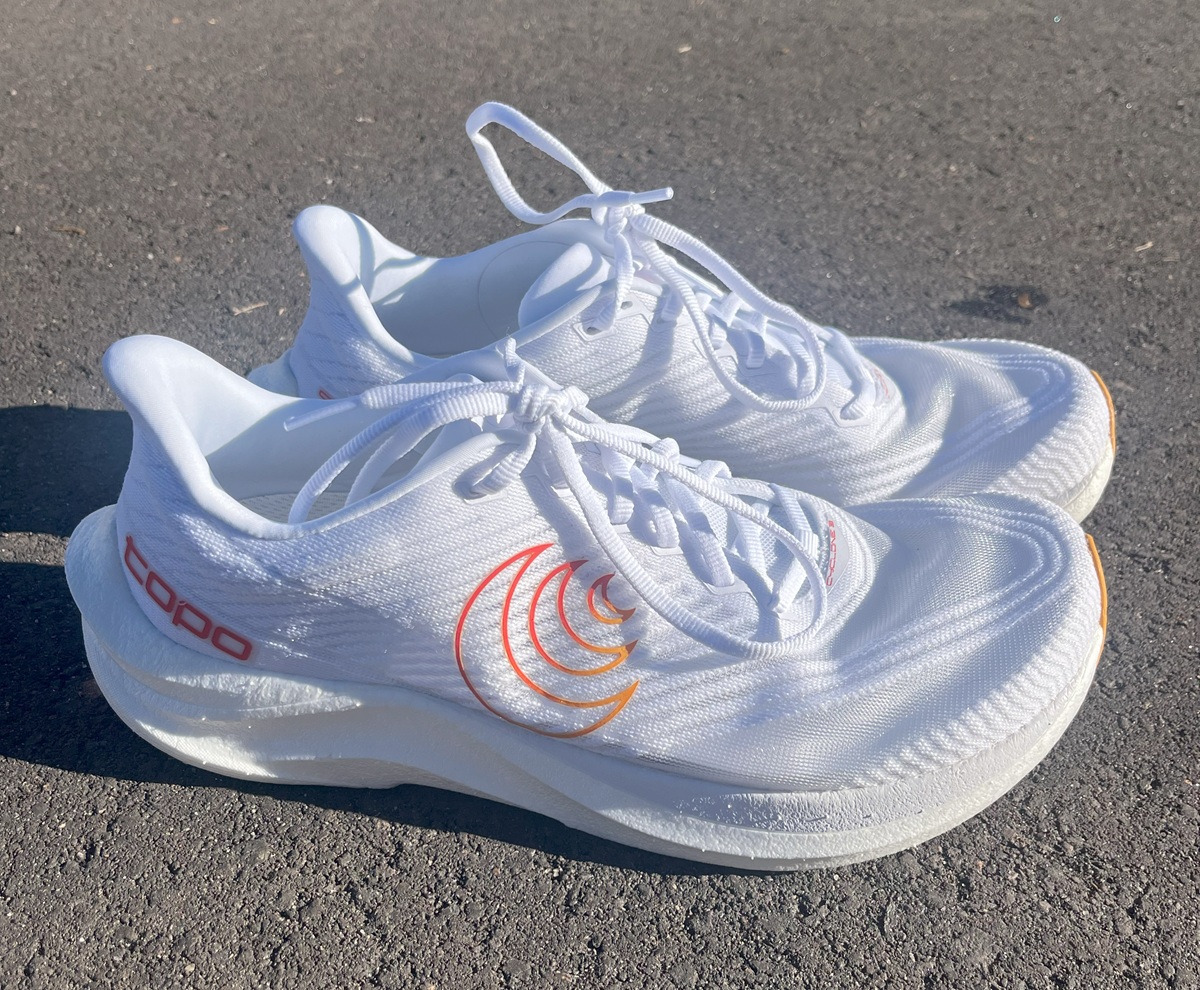 The Pebax Powered foam in the midsole provides good energy return, so even if you want something more cushioned for longer days, this responsible midsole is a great option for shorter and faster runs.
- Weight: 6.9oz Men’s, 5.5 oz Women’s
- Heel drop: 5mm
- Not available in wide
- 2 colors
- Available at REI for $150
- Check out our full review of the Topo Cyclone here >>
👉Best Zero Drop Shoe – Altra Torin
While at first glance, the Torin doesn’t look like a speed shoe. But trust us when we say it actually felt better picking up the paces in the zero drop option.
The ride feels quite stable, natural, and free. The foam that makes up the midsole is thick enough to keep the shoe from being excessively flexible, but not so thick that it restricts the flexibility of your foot.
This is going to be a great option, especially for “heavier runners” because it’s lightweight and will provide the support that you need especially when picking up the pace.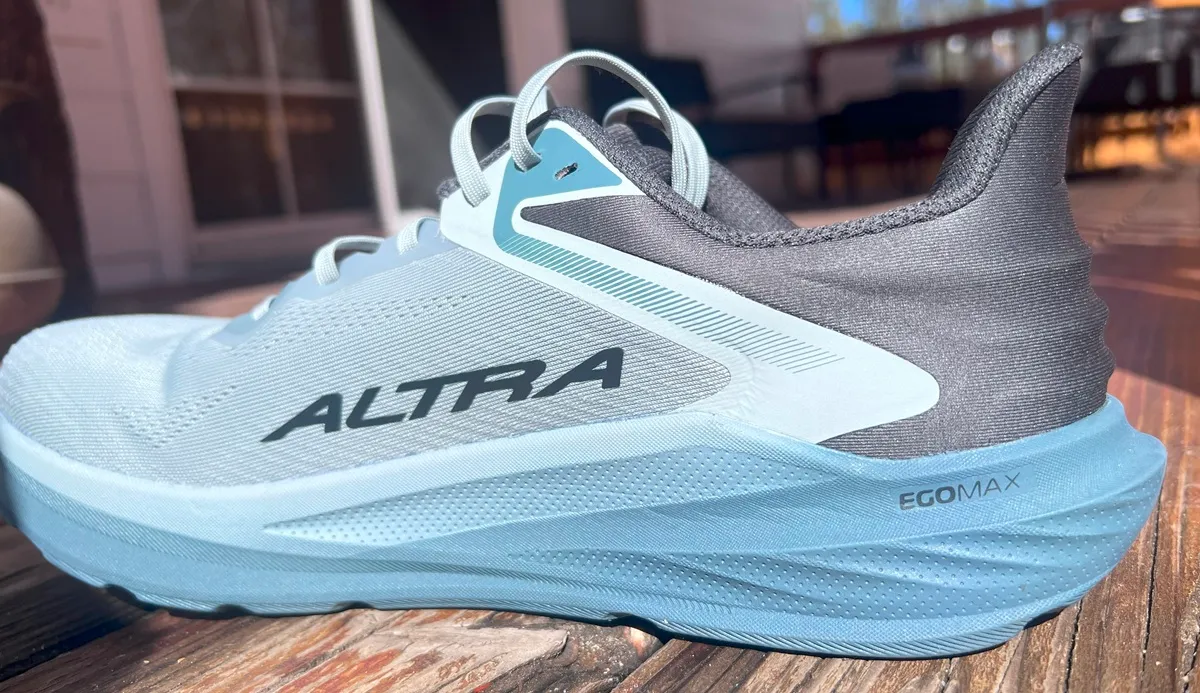
Remember, if you’re new to zero-drop shoes, give your body time to adjust. Ease into things and add foot and ankle strengthening exercises as well!
- Weight: 8.4 oz Women’s, 10.15 oz Men’s
- Heel to Toe Drop: 0mm drop
- Available in wide sizes
- 7 colorways available
- Available at Altrarunning.com for $150
- Read our full review of the Altra Torin 8 here >>
👉Best for Shorter Trail Races – Nike Terra Kiger
If you’re gearing up for a single track, shorter distance type of trail race this will be a shoe to check out.
The Vibram sole can handle the wet, the roots, and some rocks, but there is a spot down the center of the sole that is just mid-sole foam that you can feel a rock through if you step wrong.
The Kiger 10 changed from Nike’s React foam to the Cushlon 3.0 foam, both of which fall into Nike’s standard foam category. Although after trying to run back-to-back days, the midsole felt like it needed a couple of days to recover.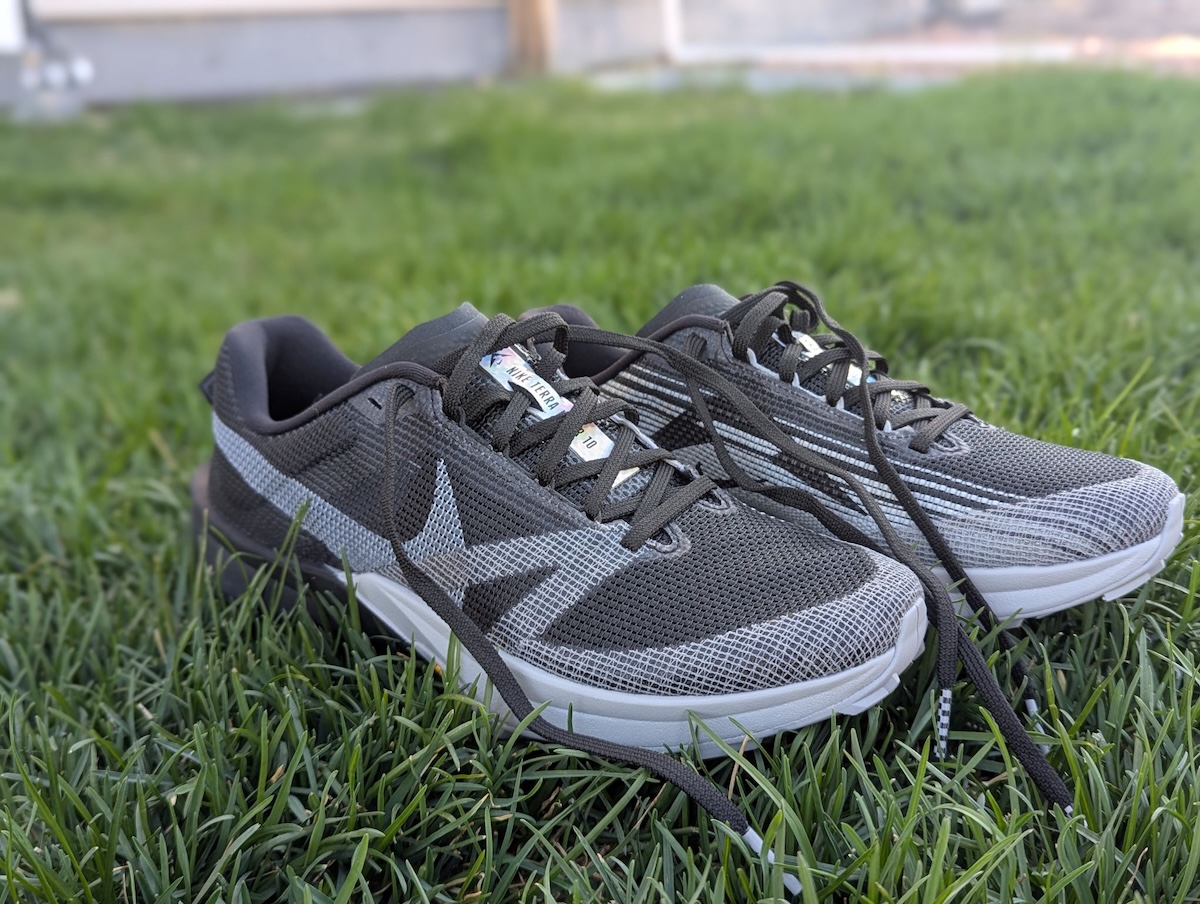 The Kiger 10 was a great shoe for weekly, short, speed sessions. Touted up to a 50k, these might be better suited for even shorter trail distances.
- Weight: 9.8 oz unisex sizing
- Heel Drop: 5 mm
- 4 colors available
- Not available in wide
- Available on Nike.com for $170
- Read our full review of the Nike Terra Kiger 10 here >>
👉Lightweight and Durable Trail Shoe – Norda 005
Believe it or not, a lightweight trail-racing shoe exists! The goal of this model is to be the lightest, fastest, and most stable shoe for trail runners, especially on race day.
We know that the price of these may cause a little bit of shock, but that’s because they’re designed to withstand the wear and tear from the trails. If you’re wearing these for an ultra distance, you want to know they’re going to hold up.
To keep that springy feel without compromising any stability, this race day shoe features an entirely pure Arnitel® (TPEE) midsole. Combining everything that you would want in a trail shoe gives the added perk of less than 7.5 ounces. 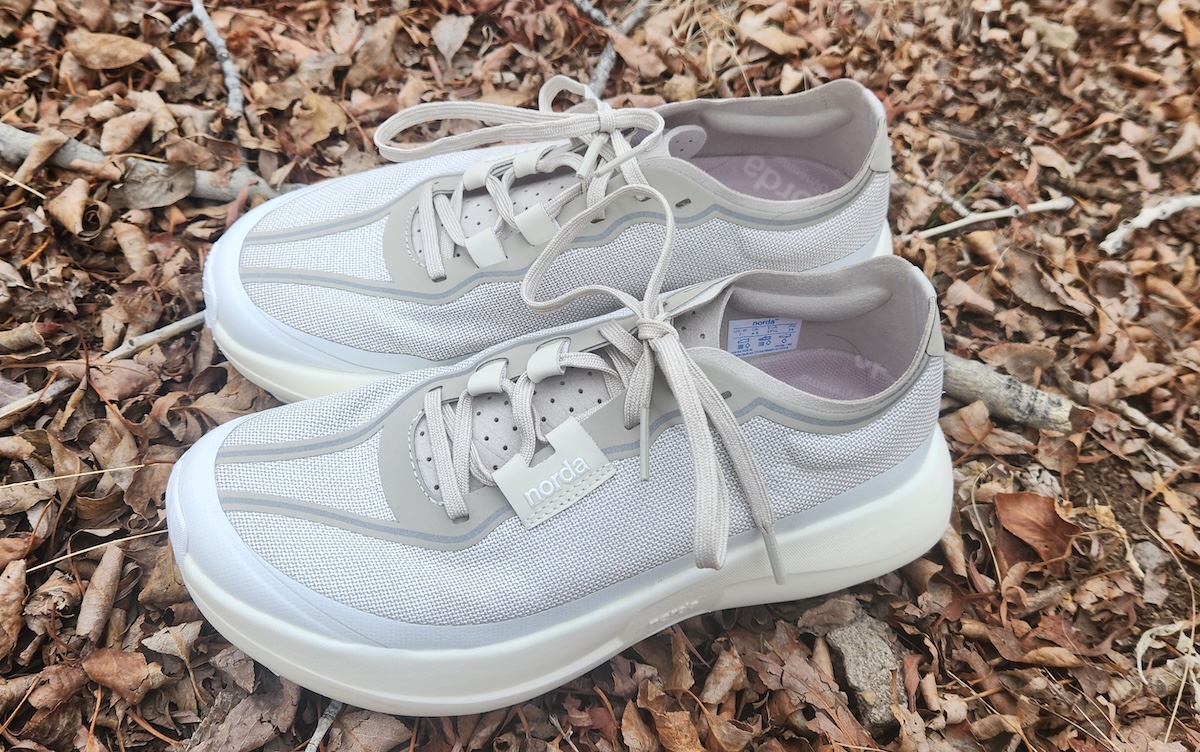 Norda wanted to keep the 005 as light as possible so that meant a fast shoe with no plate.
A unique feature of the Norda 005 is the TPEE insoles. Swap out the molded insole that comes with the shoe, with the lighter weight die-cut insole to make the shoe EVEN lighter. If you’re looking to hit a PR during a race, the die-cut insole with help your feet feel like feathers.
- Weight: 7.5 oz Men’s, 6.2 Women’s
- Heel drop: 7 mm
- 1 color available
- Not available in wide
- Available from Running Warehouse for $325.00
- Check out our full review of the Norda 005 here >>
How Many Running Shoes Should You Have?
I cover in depth why you need to rotate running shoes, but for the sake of time say a minimum of two pairs of shoes for marathon training.
And yes, that’s two different styles for during training and then a new pair coming up on race day.
If you’ve only done a 12 week training plan, then maybe you won’t need a new pair for race day. But most of us start training in an older pair and pile on the miles.
Those fresh shoes will have better structure and cushion, which we absolutely want especially if you’re running longer distances.
How Do You Tell When Your Running Shoes Are Worn Out?
If you train over longer distances, your shoes will likely wear out sooner.
If your running shoes are worn out, the upper may be worn or torn, the outsole may be smoothing out, the midsole foam may appear compressed, and you may be getting foot or knee pain when you run if you weren’t before.
These are the classic signs that your shoes are worn out, so head on over to get a new pair to be ready before the race!
If you’re looking for some guidance, check out our free beginner plans- 5K Training Plan, 10K Training Plan, Half Marathon Training Plan and Marathon Training Plan.
Looking for what to read next?
- Best Cushioned Running Shoes For Maximum Comfort
- 10 Best Low Drop Running Shoes (Helping to Resolve IT Band and Other Issues)
- 8 Best Recovery Shoes and Sandals
The post Best Non-Plated Race Day Shoes | Proof You Don’t Need Carbon to Run Fast appeared first on RunToTheFinish.
from RunToTheFinish https://ift.tt/769SjIm
Post a Comment
Post a Comment