Depending on where you live, winter running shoes might just be your Fall, Winter, and early Spring shoes. Living in Colorado means snow can happen almost any time of year, so you always need some traction and some weatherproofing to get through the chill and the snow.

Having the right gear, particularly shoes, can make all the difference for runners facing challenging weather. We’re certainly not averse to treadmill days when we just don’t want to face it, but it can actually be a lot of fun to get out and enjoy all the seasons!
It’s pretty easy to remember to switch out the clothing options. Obviously, most of us aren’t going to head out in snowy, icy, and windy weather in tanks and shorts. We dutifully break out the varying layers, hats, gloves, and ear warmers.
But many people neglect to consider that switching to a shoe meant for winter running will not only make running more enjoyable, but safer too.
Keep reading to learn more about what to look for in winter running shoes and some of my favorite picks!
Best Winter Running Shoes (And What They’re Great For)
- Best For Icy Runs – Hoka Speedgoat GTX Spike
- Best For Muddy Trails – Saucony Peregrine 16
- Best For Trail Runs – Merrell MTL Adapt Matryx
- Runner-up for Trails: Nike Pegasus Trail
- Best Zero Drop Shoes – Altra Lone Peak Waterproof
- Best For Snowy Roads – Puma Velocity Nitro 5
- Runner-up for Snowy Roads: Brooks Cascadia GTX
- Most Versatile Shoe for Winter Running – Norda 055
- Best For Slick Wet Conditions – Salomon Speedcross
- Best For Road-to-Trail – Hoka Challenger 8
10 Best Winter Running Shoes
While this isn’t an all-encompassing list, as there are simply too many shoes on the market, we’re confident there’s a nice variety of options here with one or more shoes that will meet your winter weather running needs.
You can always check out all of our running shoe reviews if there’s something particular you’re looking for.
Best For Icy Runs – Hoka Speedgoat GTX Spike ($180)
The Hoka Speedgoat is a favorite trail shoe for many. There are a few different options available so that you can wear them in every season. This version takes it a step further, with tungsten carbide spikes built into the sole to keep you upright on icy surfaces.
The mesh upper is made from GORE-TEX fabric, and the gusseted tongue has strategic cutouts for additional breathability.
The midsole is made of lightweight foam, and while the shoe has plenty of protective cushioning, it maintains a responsive toe-off should you want to pick up the pace.
 While a trail shoe, it can also work on wintery pavement just fine!
Details
- Brand: Hoka
- Usage: Trail Running
- Previous Model: Hoka Speedgoat 5
- Weight: 12.3 oz Men’s, 10.3 oz Women’s
- Stack Height: 34.6 mm
- Heel Drop: 5 mm
- Available in Wide: No
- Available in 1 color
- GTX and GTX Spike versions available
- Available from hoka.com for $180
- Read our full Hoka Speedgoat 6 review here >>
Quick Take
Pros
-
Excellent Vibram Megagrip traction across varied terrain
- Balanced cushioning with plenty of protection
- Secure fit that keeps feet from sliding around
Cons
- Not the roomiest toe box
- Upper may feel snug for some runners
Best For Muddy Trails – Saucony Peregrine 16 ($150)
The Saucony Peregrine is a popular and versatile trail running shoe that has gained a strong reputation among trail runners and outdoor enthusiasts. Designed to handle a variety of terrains and conditions, the Peregrine combines responsiveness, durability, and traction to provide a reliable and enjoyable off-road running experience.
We really appreciate that it’s not one of the overbuilt trail shoes, and the traction on the Peregrine 16 is especially fabulous.
The Peregrine has great grip on any type of trail, from technical to slick rock to mud and snow.
The Vibram sole has the same 4 mm lugs in the familiar Vibram Traction lug pattern, just with extra grippy nubbins now.
Those lugs are just deep enough to give a good run in powdery and crunchy snow. It feels like this shoe is back to its high standard of being able to handle any trail. Plus, when you throw in the GTX version, there’s a reason we love recommending this for winter running gear!!
Traction, plus feet that aren’t soggy, win.
Details
- Brand: Saucony
- Usage: Trail Running
- Previous Model: Saucony Peregrine 15
- Weight: 8.4 oz Women’s, 9.5 oz Men’s
- Stack Height: 32 mm
- Heel Drop: 4 mm (32 mm heel / 28 mm forefoot)
- Available in wide and GTX
- Available in 3 colors
- Available at saucony.com for $150
- Read our full Saucony Peregrine 16 review here >>
Quick Take
Pros
-
Extra grippy lugs
-
Firm toe bumper
-
Consistency in fit
Cons
- Can run narrow for some
- Not the lightest for a fast option
Best For Trail Runs – Merrell MTL Adapt Matryx ($190)
The Merrell MTL Adapt Matryx might surprise you, in the best way. It’s a well-balanced trail shoe that delivers comfort, traction, and durability without overcomplicating things.
If you’re logging longer miles or dealing with lingering foot issues, the extra cushion feels like a gift. And the combo of the Matryx® upper, nitrogen-infused FloatPro™ foam, and Vibram® Megagrip® outsole means this shoe is built to handle everything from rocky climbs to slick singletrack.
The Matryx® upper combines multi-filament threads of Kevlar and high-tenacity polyamide to protect your feet in all sorts of conditions. 
Merrell may not be the first brand that comes to mind for trail running, but the MTL Adapt Matryx might change that. It’s proof they’re not just making hiking boots anymore.
Details
- Brand: Merrell
- Usage: Trail Running
- Previous Model: None
- Weight: Women’s 9.45 oz, Men’s 10.15oz
- Stack Height: 36 mm
- Heel Drop: 6 mm
- Available in 2 colors
- Not available in Wide
- Available at merrell.com for $190
- Read our full Merrell MTL Adapt Matryx review here >>
Quick Take
Pros
-
Excellent Vibram Megagrip traction on rough and wet terrain
-
Durable Matryx upper made with Kevlar fibers
-
Balanced cushioning that provides impact protection without feeling overly soft
Cons
- Snug midfoot fit may not work for every runner
- Not available in wide
Runner-up for Trails: Nike Pegasus Trail ($175)
It can be hard to narrow the list down, so here we are with a runner-up!
The Nike Pegasus Trail is waterproof with GORE-TEX, so you can count on having dry feet regardless of the weather you encounter. The shoe also has a higher ankle gaiter for extra coverage.
My husband found these to be a great shoe for going from roads to trails, which is also a good sign for handling traction in the snow.

The Pegasus Trail has a durable and lightweight foam providing stability on even the rockiest trails. The traction pattern with rubber nubs provides plenty of grip whether you’re heading up the mountain or down, but isn’t too chunky for a seamless transition to the road.
Details
- Brand: Nike
- Usage: Trail Running
- Weight: Women’s 9.45 oz, Men’s 10.15oz
- Stack Height: 36 mm
- Weight: 10.5 oz Men’s, 8.5 oz Women’s
- Heel Drop: 9 mm
- Neutral shoe
- Waterproof
- Available on nike.com for $175
- Read our full Pegasus Trail review here >>
Quick Take
Pros
-
Soft, comfortable React foam cushioning
-
Flexible feel without sacrificing underfoot support
-
Smooth transition between roads and hard-packed trails
Cons
- No rock plate to protect against sharp rocks
- Less aggressive traction than more technical trail shoes
Best Zero Drop Shoes – Altra Lone Peak Waterproof ($165)
Altra is known for its zero drop shoes and the footshape fit, which means a nice wide running shoe. These shoes are definitely comfortable if you’re a zero-drop shoe regular!
Having run in the original, I’m super happy to recommend the waterproof version for a little more protection.

Similar to their classic Lone Peak trail shoe, the waterproof version has a HydroGuard waterproof membrane lining by Cosmo that will help keep your feet drier than a regular shoe and offers great breathability.
The outsole, called MaxTrac, provides grip, traction, and durability regardless of whether you’re on trails or snowy roads. The outsole also has Altra’s canted Trailclaw lugs for added traction.
Details
- Brand: Altra
- Usage: Trail Running
- Weight: 11.3 oz Women’s, 13.85 oz Men’s
- Stack Height: 36 mm
- Heel Drop: 0 mm
- Available in 6 colors
- Not available in wide
- Available on altra.com for $165
- Read our full Altra Lone Peak review here >>
Buy Altra Lone Peak Waterproof
Quick Take
Pros
-
Waterproof upper helps keep feet dry
-
Extra-roomy FootShape toe box for wide feet
-
Reliable MaxTrac traction across varied trail surfaces
Cons
- Minimal underfoot protection on very rocky trails
- Zero-drop platform may require an adjustment period
Best For Snowy Roads – Puma Velocity Nitro 5 ($140)
If you primarily run on roads but still want some extra confidence when winter weather rolls in, the Puma Velocity Nitro 5 is worth considering. Its PUMAGRIP outsole delivers seriously good traction on wet pavement.

Painted crosswalks, smooth concrete, and even darker asphalt can get surprisingly slick, but you likely won’t even notice it in these shoes.
The NITROFOAM midsole also provides enough cushioning to take the edge off the pavement without sacrificing ground feel. It’s lightweight and flexible, which makes it a comfortable option for everyday miles.
One thing to keep in mind is that this isn’t a waterproof shoe, so it won’t offer the same protection as a GORE-TEX winter running shoe when you’re dealing with deeper snow or slushy conditions. But for wet roads and lighter winter conditions, the excellent grip makes it a great option.
Details
- Brand: Puma
- Usage: Daily Trainer
- Previous Model: Velocity Nitro 4
- Weight: 7.4 oz Women’s, 8.6 oz Men’s
- Stack Height: 33 mm heel / 25 mm forefoot
- Heel Drop: 8 mm
- Available in 8 colors for Women and 9 colors for Men
- Available in wide: Yes
- Available on puma.com for $140
- Read our full Puma Velocity Nitro 5 review here >>
Quick Take
Pros
- Natural, flexible ride with good road feel
- Lightweight and easy to turn over
- Excellent PUMAGRIP traction
Cons
- Standard fit is fairly close
- Less protection for very long runs
- Limited bounce compared with higher-stack trainers
Runner-up for Snowy Roads: Brooks Cascadia GTX ($190)
Brooks shoes are consistently on “Best Of” lists for a reason. Another great shoe for trail runners, the Cascadia will transition well to any snowy road.
While waterproof, they have tabs to make adding a gaiter for extra protection super easy. The shoe also has what they call a “Ballistic Rock Shield” to help keep out debris. They have added an extra 2mm of cushioning, but with its new DNA Loft v2 midsole, the cushioning is softer and lighter than previous models.
I’ve run in a few different models of this shoe and always found it really comfortable for a lot of trail miles.

While a lot of Brooks shoes have a pretty substantial heel drop of 12mm, these come in at only 6mm, so a nice middle ground between zero drop and your typical Brooks running shoe.
Details
- Brand: Brooks
- Usage: Trail Running
- Weight: 9.4 oz Women’s, 10.7 oz Men’s
- Stack Height: 35 mm heel
- Heel Drop: 6 mm
- Available in 3 colors
- Available in wide
- Available on brooksrunning.com for $190
- Read our full Brooks Cascadia review here >>
Quick Take
Pros
- Natural, flexible ride with good road feel
- Lightweight and easy to turn over
- Excellent PUMAGRIP traction
Cons
- Standard fit is fairly close
- Less protection for very long runs
- Limited bounce compared with higher-stack trainers
Most Versatile Shoe for Winter Running – Norda 055 ($325)
If you’re looking for one shoe that can handle a little bit of everything winter throws your way, the Norda 055 is worth a look. It’s built for long, adventurous mountain days, with a highly cushioned platform, durable construction, and sticky traction that can handle a variety of trail conditions.
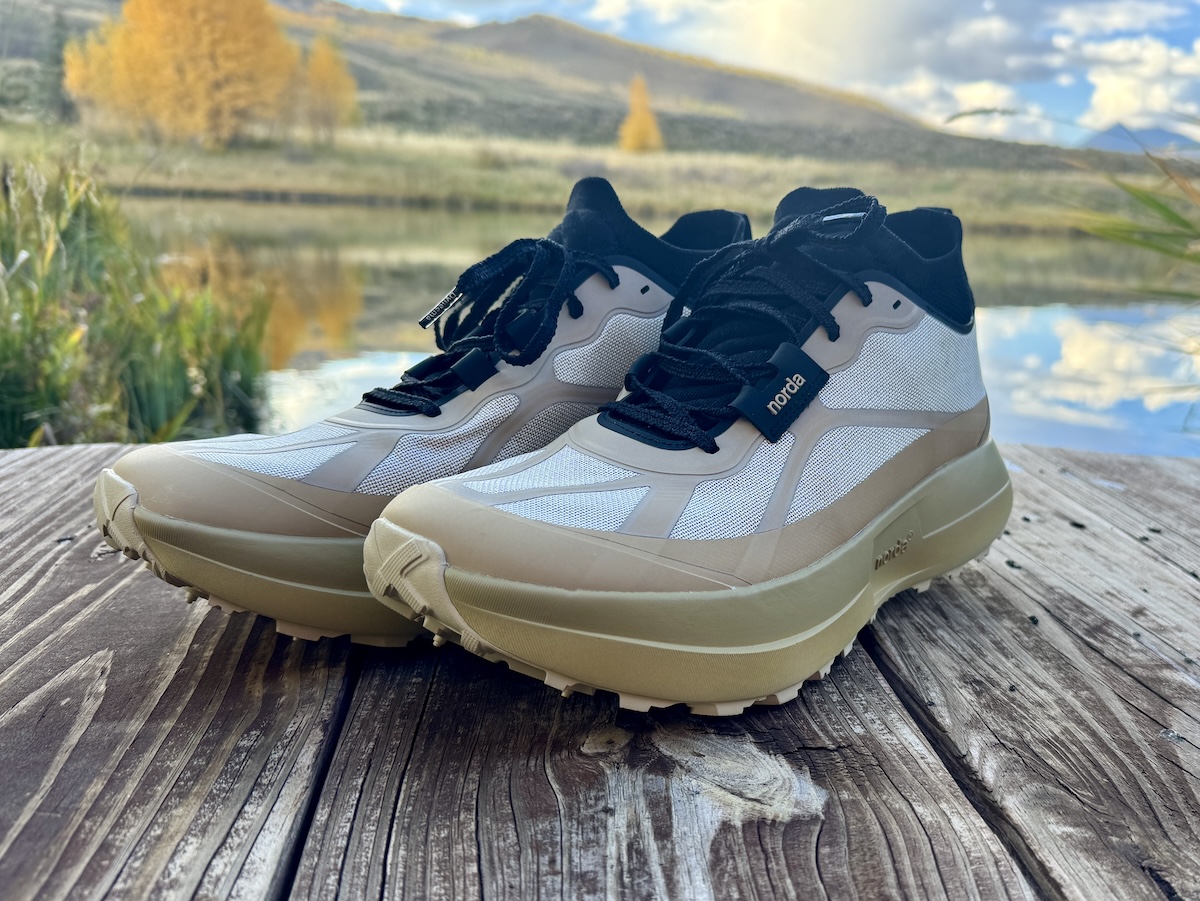
The upper is another reason this shoe stands out for winter running.
The standard 055 uses naturally water-resistant Dyneema fabric that sheds water and light weather, helping keep your feet protected in soggy conditions.
Underfoot, the 38mm stack of supercritical foam delivers plenty of cushioning and protection. Despite its rugged, almost boot-like appearance, it’s surprisingly light and agile.
Details
- Brand: Norda
- Previous Model: None
- Usage: Trail Running
- Weight: 8.64 oz (Women’s Size 8)
- Stack Height: 38 mm heel
- Heel Drop: 7 mm
- Colors: Strato, Thistle
- Available in Wide: No
- Available on REI.com for $325
- Read our full Norda 055 review here >>
Quick Take
Pros
-
Great traction
-
Textured laces that stay tightly tied
-
Plush, responsive cushioning
Cons
- Can get warm
- Upper has no stretch, so sizing can be tricky
- Pricey
Best For Slick Wet Conditions – Salomon Speedcross ($150)
If your winter runs regularly take you over slippery terrain, the Salomon Speedcross 6 is worth considering. Its aggressive 5mm lugs are designed to dig into loose surfaces, giving you the traction needed when conditions get messy.
The deep Mud Contagrip lugs cut through muddy conditions to find traction underneath, while the shoe felt secure on steep descents and slippery trails. However, wet rocks can still be tricky.
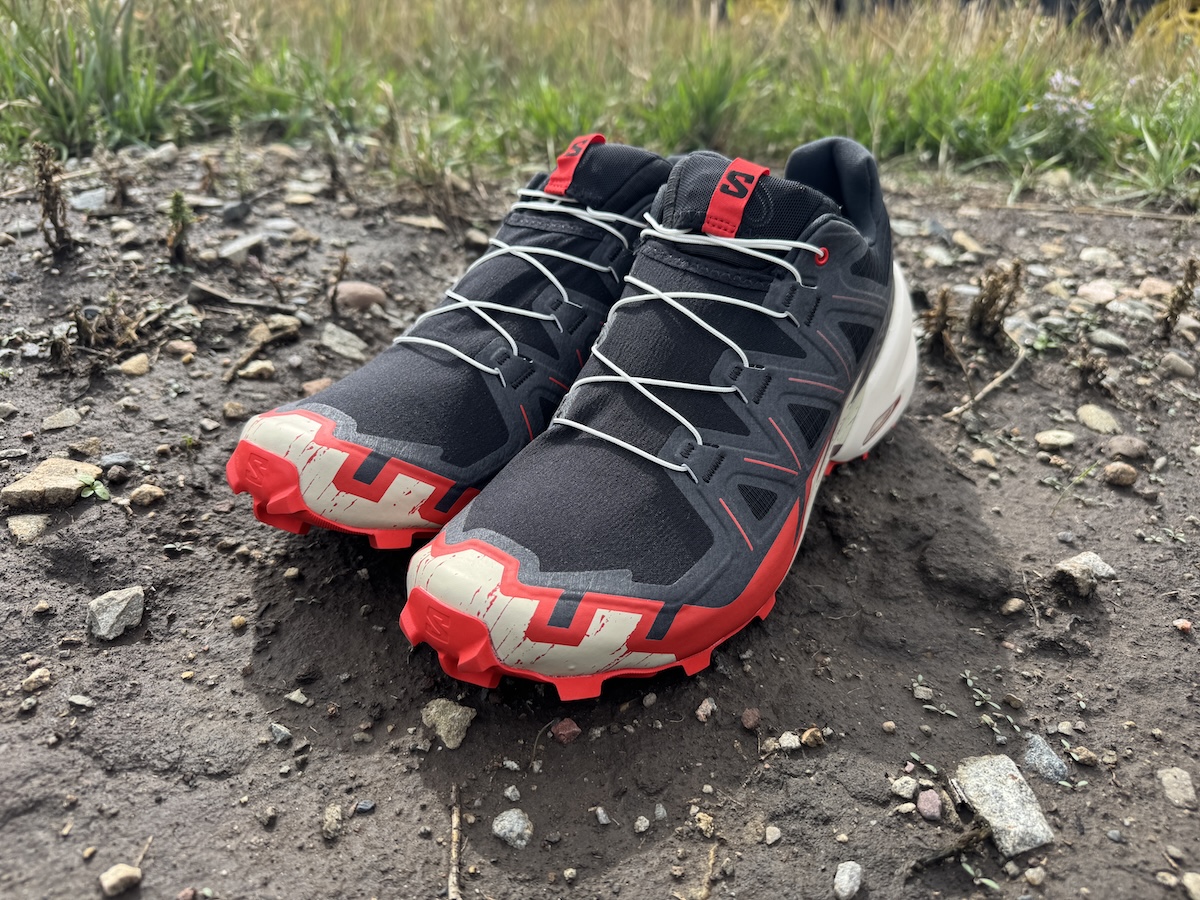
The dense upper fabric helps keep the elements out and your feet warm (but maybe a bit too warm on hot days).
If your winter routes are mostly muddy, technical trails rather than roads, the Speedcross 6 is an excellent choice. The shoe is also available in a GORE-TEX version for added weather protection.
Details
- Brand: Salomon
- Usage: Trail Running
- Previous Model: Salomon Speedcross 5
- Weight: 10.5 oz
- Stack Height: 32 mm
- Heel Drop: 10 mm
- Available Colors: 5 for men, 4 for women
- Available in Wide: Yes
- Available on salomon.com for $150
- Read our full Salomon Speedcross 6 review here >>
Quick Take
Pros
-
Exceptional traction
-
Debris protection
-
Responsive ride
Cons
- Poor on pavement
- Narrow fit
Best For Road-to-Trail – Hoka Challenger 8 ($155)
If your winter running routes take you from pavement to gravel paths and moderate trails, the Hoka Challenger 8 handles all those terrains. It’s designed to transition between roads and trails, giving you plenty of cushioning without sacrificing the traction you need when heading off-road.
The updated version has 4mm outsole lugs that provide great grip. The softer rubber makes it comfortable on pavement, so you don’t have to worry about wearing down aggressive trail lugs during road miles.

While it isn’t designed for particularly technical or muddy trails, it’s a versatile option for runners who encounter a mix of snowy roads, gravel, and moderate trails during the winter season.
Details
- Brand: Hoka
- Usage: Road to Trail
- Previous Model: Hoka Challenger 7
- Weight: 8.7 oz Women’s, 9.7 oz Men’s
- Heel Drop: 8 mm
- Stack Height: 42 mm men/ 39mm women
- Available in 5 colors and GTX (waterproof)
- Available from hoka.com for $155
- Read our full Hoka Challenger 8 review here >>
Quick Take
Pros
-
Comfortable cushioning
-
Easily transitions road to trail
-
Improved grip
Cons
- Not the fastest feeling shoe
- Not enough grip on more technical trails
- Increased heel drop
What to Look for in Winter Running Shoes
Whether you live in a milder climate or one that’s a bit colder, you’re going to deal with a variety of weather conditions in the winter. I’m talking about cold temperatures (what’s actually cold is up for debate depending on where you live), rain, snow, ice, and even mud.
Shoes that keep your feet dry and offer security and stability on tricky surfaces will go a long way in ensuring you continue to have fun on your runs and avoid injury. So what are some key features to look for?

#1 Type of Shoe and Tread
You can find plenty of options for winter running shoes regardless of whether you run roads or trails. But one of the benefits of a trail shoe for winter running, even on roads, is the more aggressive tread.
As it does on trails, the tread of a trail running shoe provides more traction. This can come in handy when navigating snow piles and ice on sidewalks and roads. There are also shoes with built-in spikes that are really handy in more severe icy conditions (see below!).
Not sold on trail shoes for road running? Don’t worry, there are plenty of winter road-specific shoes you can keep running in with modifications like screws. You can also get a pair of yak-trax or metal spikes to attach to your road shoes to ensure you have the traction you need to stay on your feet.
#2 Waterproofing and Insulation
As I’ve mentioned, in the winter you’re going to end up out there in snow, ice, wind, and rain. It’s one thing to have wet feet in the summer, but wet feet in the winter when it’s freezing will quickly have you wishing you’d just stayed home.
To avoid cold and wet feet, look for waterproof shoes. Shoes with GORE-TEX uppers are the most common option to repel water and keep your feet dry. This also makes the shoe warmer and is why we often don’t wear it in the summer.

Please note that waterproof and water-resistant are not the same thing. Water-resistant materials may keep you dry to an extent, but you could still wind up with damp or wet toes!
Another thing to consider is insulation. As with waterproofing, shoes that are great for the other three seasons tend to allow for more breathability to keep our feet dry and hopefully blister-free. You’ll notice on some winter shoes that they’ll offer more insulation to help your feet stay warm.
#3 Visibility
Since we’re well past daylight saving time, the days have gotten woefully short when it comes to sunlight. This means you may be out in the dark for many runs.
Another feature to consider when it comes to winter running shoes is their visibility. Do they have reflective markings that can help cars see you earlier? Pair them with lights and reflective clothing, and you’ll be easier to see and safer.

#4 Shoe Coverage
A lot of summer shoes tend to be lower cut. This can be problematic on wet winter runs where you know you’ll be in heavy snow because it can allow snow, rain, and debris into your shoe. BRRRRRR.
Some winter shoes come with a higher profile around the ankles. They may or may not work for everyone. If higher-cut shoes aren’t for you, opt for some accessories like higher-cut socks or gaiters to provide the coverage you need, especially if out on trails or in deeper snow on the roads.
One other thing I want to mention before we dive into shoe recommendations is to keep in mind your general running shoe needs. If you need a support shoe during the other seasons, make sure you look for winter running support shoes.
Same thing if you wear neutral shoes. If you wear shoes with a wide toe box, don’t go squeezing your feet into a narrower style through the winter.
Looking for what to read next?
- Best Winter Running Gear: We Tested 100+ Items in All the Weather
- 10 Best Running Gloves from Light to Serious Warmth
- Running In Snow and Ice: 9 Tips to Stay Upright
Other ways to connect with Amanda
Instagram Daily Fun: RunToTheFinish
Facebook Community Chatter: RunToTheFinish
Sign Up to Receive a Weekly Newsletter with Top Running Tips and Laughs
The post 10 Best Winter Running Shoes (And How to Choose Them) appeared first on RunToTheFinish.
from RunToTheFinish https://ift.tt/QE9dtpu
Post a Comment
Post a Comment