I love sugar. There, I said it. I’ve written before about being a sugar-free failure, and after years of running, coaching and talking with registered dietitians, I’ve learned that trying to eliminate sugar probably isn’t the answer for most of us.
In fact, as runners, we need carbohydrates to fuel our workouts, recover well and have enough energy to get through the rest of our day.
But what about when you finish lunch and immediately start hunting for chocolate? Or you find yourself standing in the pantry at 3 PM looking for anything sweet?
I’ve certainly been there, and I know I’m not alone.
Sometimes those cravings are telling us something important about how we’re fueling. Other times they’re simply habits we’ve developed over the years, or maybe we’re tired, stressed or just really enjoy dessert.
None of those things makes us bad at eating!
What I want to talk about today is how to recognize the difference, make sure you’re eating enough to support your running, and find some realistic ways to reduce added sugar if that’s something you’d like to do for your overall health.
And no, you don’t need to give up chocolate.
First, Runners Need Sugar!
Before we get into cravings, I want to make this point really clear because I’ve seen far too many runners trying to avoid carbohydrates while also training for a half marathon or marathon.
Your body needs carbohydrates, and sugar is one type of carbohydrate that can be especially useful during exercise.
When we eat carbohydrates, they’re broken down into sugars that our bodies can use for energy or store as glycogen in the muscles and liver.
That stored glycogen is a big part of what keeps us moving through our workouts.
During longer runs, we need to take in additional carbohydrates because our glycogen stores are limited. And this is where those energy gels, chews, sports drinks and even gummy bears come in!
They’re providing quickly available energy that can help us maintain our pace, delay fatigue and avoid the dreaded bonk.
Depending on the length and intensity of your run, you may need anywhere from 30 to 90 grams of carbohydrates per hour. Some runners train their guts to tolerate even higher amounts.
So please don’t look at the sugar in your running gels and decide you should skip them to be healthier.
Underfueling your training isn’t doing your body any favors.
But does that mean we should eat unlimited added sugar throughout the rest of our day? Probably not. Which brings us to the balance I’m always talking about with nutrition.
How Much Added Sugar Should You Eat?
This is where it helps to understand the difference between naturally occurring sugar and added sugar.
Naturally occurring sugars are found in foods like fruit and dairy products. These foods also provide things like fiber, vitamins, minerals and protein, depending on what you’re eating.
Added sugars are those added during processing or preparation, whether that’s the sugar in soda, sweetened coffee, candy, baked goods or even some salad dressings.
And yes, honey, maple syrup and coconut sugar count as added sugars when we’re using them to sweeten foods. They aren’t magically different because they sound more natural.
The American Heart Association recommends limiting added sugar to:
- Women: 25 grams per day, or about 6 teaspoons
- Men: 36 grams per day, or about 9 teaspoons
For reference, 4 grams of sugar is roughly 1 teaspoon.
These are general public health recommendations, not rules for how many grams of carbohydrates an endurance athlete should consume during training.
In fact, trying to stick rigidly to those numbers while fueling a three-hour long run could create more problems than it solves.
For everyday eating, though, it’s worth looking at where added sugar is showing up and whether those foods are helping you feel satisfied and energized.
I don’t think we need to obsess over every gram. I’d rather see runners eating enough food, including carbohydrates, protein, fat, fruits and vegetables, and then making some intentional choices about added sugar.
RELATED: Is Sugar Bad for Runners? What You Really Need to Know
Why Am I Craving Sugar All the Time?
Before deciding you need more willpower, I’d like you to consider a few things.
Are you eating enough throughout the day? Did you fuel your morning workout? Are you getting enough carbohydrates with your meals? Have you been sleeping poorly?
When we aren’t giving our bodies enough energy, it’s pretty reasonable that we’ll start looking for foods that provide energy quickly.
And sweet foods are often convenient, enjoyable and readily available.
This is especially important for runners because it’s surprisingly easy to underestimate how much food we need when our mileage increases.
You might be eating exactly the same breakfast and lunch you always have, but now you’re running 30 miles a week instead of 15.
Your body notices that difference!
Of course, cravings don’t always mean you’re underfueled. Sometimes you really do just want a cookie because cookies are delicious.
I don’t want us to turn every food choice into some kind of test we need to pass.
Instead, we’re going to look at a few changes that may help you feel more satisfied throughout the day while still enjoying the foods you love.
11 Ways to Manage Sugar Cravings Without Giving Up Sugar
I’ve talked with a lot of registered dietitians over the years, and one of the things I appreciate is how often their advice comes back to the basics rather than another restrictive food plan.
A big thank you to Lindsey of The Lean Green Bean, a fantastic registered dietitian who also spent many years running, for sharing a number of these ideas with me.
I love getting nutrition advice from someone who understands both the science and what it’s like to be training, hungry and trying to put together meals in the middle of a busy day.
These aren’t rules that you need to follow perfectly. Pick a couple that sound useful and see whether they make a difference.
1. Start By Making Sure You’re Eating Enough
This is the first thing I’d like every runner to consider, especially if you’re finding yourself craving sweets constantly.
It’s easy to get caught up in what we should eat less of without ever considering whether we’re eating enough in the first place.
I see runners who finish a workout, have coffee and maybe a small breakfast, rush through lunch and then wonder why they’re ready to eat the entire pantry by late afternoon.
Well, your body has been asking for energy all day!
Before trying to cut back on sugar, think about whether you’re consistently eating meals that provide enough carbohydrates, protein and fat.
And don’t forget to account for your training.
A five-mile morning run requires energy, even if it felt easy.
If your cravings are especially strong on long-run days or after harder workouts, that’s a good reason to take another look at your pre-run, during-run and post-run fueling.
You may find that eating more earlier in the day makes those afternoon cravings much less intense.
2. Stop Skipping Carbohydrates at Meals
I know we’ve spent years hearing about cutting carbohydrates, but as a running coach, I’m going to keep reminding you that carbs are our friend.
We need them for training, but we also need them to support normal daily activities.
If you’re eating a salad with chicken for lunch and finding yourself desperately searching for candy two hours later, consider adding some rice, potatoes, bread or another carbohydrate source to that meal.
You might simply need more energy.
And don’t forget about fruit!
Berries, bananas, apples and oranges provide carbohydrates along with fiber and a variety of nutrients.
There’s no reason to be afraid of the natural sugar in fruit.
3. Increase Your Protein Intake
This is probably the change that made the biggest difference for me personally.
For a long time, I was pretty focused on eating enough carbohydrates to support running, but I wasn’t paying nearly as much attention to protein.
Once I started being more intentional about getting protein throughout the day, I noticed I felt satisfied longer and wasn’t constantly looking for another snack.
Protein helps with muscle repair and recovery, which is already a great reason for runners to make it a priority.
It also contributes to fullness, which can make a difference when you’re trying to understand why you feel hungry again so soon after eating.
A useful starting point might be getting around 25 to 30 grams of protein at each main meal, though your total needs will depend on your body size and training.
And yes, we’re still eating carbohydrates right alongside that protein!
Some easy ways to add more protein include Greek yogurt, eggs, cottage cheese, tofu, beans, fish or chicken.
In our 30 Day Runner Nutrition Course, with RD Serena Marie, we talk a lot about protein because it’s one of those things that can make a difference in how runners feel and recover.
4. Find the Added Sugar You Aren’t Really Enjoying
Here’s where I think reducing added sugar can be pretty painless.
I’m not interested in giving up a really good piece of birthday cake. But do I particularly care if my peanut butter has added sugar?
Nope.
And once I started paying attention to food labels, I realized how much added sugar can show up in foods that don’t necessarily need it.
Some common examples include:
- Flavored oatmeal packets
- Sweetened yogurt
- Granola and protein bars
- Peanut butter and other nut butters
- Salad dressings and sauces
- Sweetened coffee drinks
Now, not all of these foods are necessarily high in added sugar, and there’s nothing wrong with choosing a version you enjoy.
I just think it’s useful to know what you’re eating.
For example, switching from flavored oatmeal to plain oats with berries, cinnamon and peanut butter might give you a breakfast that’s more satisfying and has less added sugar.
And if you really love your flavored yogurt, keep eating it!
The point is to look for changes that don’t feel like you’re giving something up.
5. Don’t Wait Until You’re Starving to Eat
Have you ever finished a busy afternoon, realized you haven’t eaten in six hours and suddenly wanted every sweet thing in the kitchen?
I have.
When we’re extremely hungry, grabbing something quick and easy sounds a whole lot more appealing than making a balanced meal.
One of the simplest things you can do is make sure you’re eating regularly enough that you aren’t reaching that point.
For some runners, that’s three satisfying meals. Others may feel better with a couple of snacks between meals.
Your training schedule can play a big role here.
If you run in the morning and won’t eat lunch for several hours, having a snack after your workout may help prevent that massive hunger later.
This isn’t about controlling your appetite. It’s about actually responding to what your body needs before you’re completely exhausted and hungry.
6. Pair Your Sweet Snacks With Something More Filling
Sometimes you want something sweet, and I see absolutely no reason that needs to turn into a big internal debate.
But if you notice you’re hungry again 20 minutes after eating a handful of candy, you might need a more substantial snack.
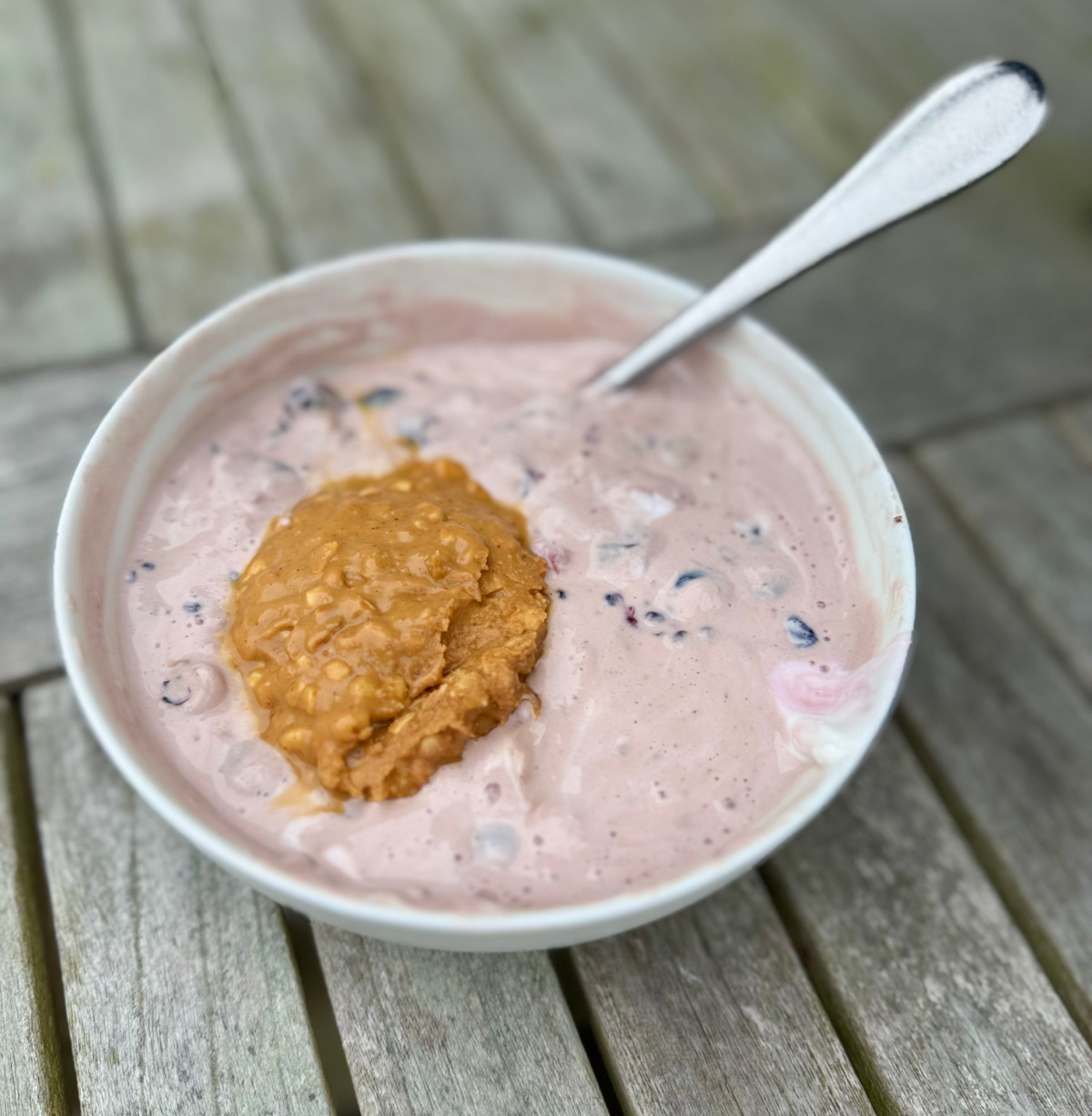
Try pairing that sweet food with something that provides protein, fat or fiber.
A few examples:
- Chocolate with almonds
- An apple with peanut butter
- Greek yogurt with berries and chocolate chips
- A cookie alongside a glass of milk
- A banana with peanut butter
You’re still enjoying the sweet food, but you’re also giving your body something that may help you feel satisfied longer.
I think this is a much more useful approach than trying to convince yourself a handful of carrots is going to satisfy a craving for chocolate.
Sometimes it just won’t!
7. Think About Whether It’s Hunger, Habit or Just Enjoyment
This is one of those things that really helped me understand my own eating habits.
For years, I automatically wanted something sweet after dinner.
Was I hungry? Sometimes.
Did I actually want dessert? Often!
But other times, I realized it was simply part of my routine. Dinner was finished, so naturally it was time for something sweet.
There’s nothing inherently wrong with that.
However, if you’re trying to understand your cravings, it can be useful to ask yourself a few questions.
Am I still hungry? Did I eat enough today? Is this something I really want right now, or am I grabbing it because it’s sitting on the counter?
And if the answer is that you genuinely want the chocolate, enjoy the chocolate.
We don’t need to turn food into a moral decision.
The goal is simply to become a little more aware of what we’re doing and why.
8. Enjoy the Dessert Instead of Making It Off-Limits
I know there are people who love a strict challenge and feel great when they decide to completely eliminate sugar.
I’m not one of them.
In fact, the minute I tell myself I absolutely cannot have something, I suddenly want it more than ever.
Anyone else?
That’s one reason I prefer making small adjustments rather than trying to follow a bunch of rigid food rules.
I remember cutting my birthday cake into smaller pieces and enjoying it over several days instead of feeling like I needed to finish a giant slice all at once.
And you know what? I really enjoyed that cake.
You might find that slowing down and actually paying attention to the dessert makes it more satisfying.
Or you might want the entire slice, and that’s fine too.
This isn’t about forcing yourself to eat less every time. It’s about getting away from the idea that certain foods are forbidden, which can make them even more appealing.
9. Make Small Changes Rather Than Trying a Sugar Detox
When I first started paying attention to how much sugar I was eating after college, I didn’t make one massive change.
I started with little things.
Maybe that meant using less sugar in coffee, choosing a different breakfast or realizing that I didn’t particularly enjoy a snack I’d been eating out of habit.
Those changes were easier to maintain because they didn’t require me to completely change how I ate.
If you’re drinking several sweetened beverages a day and want to reduce your added sugar intake, start by changing one of them.
If you love baking, try reducing the sugar in a familiar recipe by a small amount and see whether you still enjoy it.
And if you love a particular food, there’s no requirement that you find a substitute.
I also want to move away from calling this a sugar detox.
Your liver and kidneys are already doing the work of processing and removing waste from your body. You don’t need a special sugar cleanse.
And while people may notice changes in cravings or how they feel when their eating habits change, that’s not evidence that sugar is a drug or that everyone needs to go through withdrawal.
I’d much rather see us building eating habits that support our training and health over the long term.
10. Keep Easy, Satisfying Snacks Available
I don’t know about you, but when I finish a workout or get caught up working all afternoon, I don’t always want to spend 30 minutes making something to eat.
This is where having easy snacks available makes a difference.
And again, I’m not suggesting we need to throw out all the cookies and candy to create a perfectly healthy kitchen.
I’m talking about having options that actually help you feel fueled.
Some of my favorites to recommend include:
- Greek yogurt with fruit and granola
- Cottage cheese with berries
- Trail mix with nuts and dried fruit
- Cheese and crackers
- Homemade energy balls
- Toast with peanut butter and banana
- Hard-boiled eggs with fruit or toast
For runners, snacks that include carbohydrates and protein can be especially useful after workouts.
One thing I’ve noticed is that when I have filling options ready to go, I’m less likely to reach for random handfuls of something while trying to figure out what I actually want to eat.
And sometimes those homemade protein desserts can be a fun way to get both!
RELATED: High Protein Dessert Ideas That Actually Taste Good
11. Don’t Overlook Your Sleep
I know, what does sleep have to do with craving sugar?
Potentially quite a bit.
Research has found that insufficient sleep can affect appetite regulation, hunger and food choices.
And if you’ve ever had a terrible night’s sleep and spent the next afternoon searching for something to give you a little energy, you probably don’t need a study to understand why this matters.
As runners, we’re also asking our bodies to recover from training.
Consistently shortchanging sleep can make that recovery harder while also leaving us feeling tired and hungry.
Does getting eight hours of sleep mean you’ll never want a cookie again? Of course not.
But if you’re constantly tired, having intense cravings and struggling to recover from workouts, your sleep habits deserve some attention.
What If You’re Still Craving Sugar All the Time?
After trying some of these strategies, you may find that your cravings become less frequent or simply feel less urgent.
That’s great!
But I also want to remind you that wanting sweet foods is normal. We naturally enjoy sweetness, and there isn’t anything inherently wrong with that.
What concerns me more is when runners are constantly hungry, struggling with low energy, recovering poorly or feeling like food is something they have to control all day.
Those can be signs that we need to take a closer look at overall fueling, not simply try harder to avoid sugar.
If your cravings feel unusually intense or are accompanied by excessive thirst, frequent urination or unexplained fatigue, it’s worth talking with a healthcare professional. A sports registered dietitian can also help you assess whether you’re meeting your training needs.
And if you find yourself constantly thinking about food or feeling guilty every time you eat something sweet, I’d encourage you to get some support rather than adding more food rules.
The Goal Isn’t to Quit Sugar
After all these years of running, coaching and learning from registered dietitians, this is where I’ve landed.
I want runners to eat enough to support the work they’re asking their bodies to do.
I want you to fuel those long runs with the carbohydrates you need, eat real meals afterward and stop feeling like every craving is something you need to fight.
And yes, I also think we can be mindful of how much added sugar we’re eating throughout the rest of the day because long-term health matters too.
Those things aren’t in conflict.
Maybe you start eating a more substantial breakfast and suddenly realize you’re not nearly as interested in the office candy bowl at 3 PM.
Maybe you start getting more protein and find you’re satisfied longer.
Or maybe you just discover that you really love having chocolate after dinner, and you keep doing exactly that.
I’m good with all of those outcomes.
The goal is to feel good, run well and develop eating habits that support your health without making food one more thing to stress about.
And I think that’s a much better place to start than trying to quit sugar.
The post Why Am I Craving Sugar All the Time? 11 Tips for Runners appeared first on RunToTheFinish.
from RunToTheFinish https://ift.tt/mUvPShN
Post a Comment
Post a Comment