Training for a marathon is already expensive, race fees, shoes, gear and then you get to fueling. Suddenly you’re staring at a list of $2–$4 energy gels wondering, do I really need to spend this much every long run? Fueling is a huge piece of hitting your goals, so we’re going to break down the gel vs cheaper fueling options.

It’s a fair question. Because while running gels are designed for performance, plenty of runners are experimenting with cheaper options from fruit snacks, applesauce packets to the currently hot Nerds Clusters, to get through those miles.
So what actually works? And more importantly, where can you save money without sabotaging your training?
After years of coaching runners (and seeing what holds up over 16–20 mile long runs), the answer isn’t as simple as “gels are better” or “just eat candy.” Sometimes the budget options work surprisingly well. And sometimes… they don’t.
Let’s break down when you can save, when it’s worth spending, and how to fuel your marathon training without draining your wallet.
How to Fuel Your Marathon Training for Less
If you’re not sure how much fuel you should be taking in during your marathon training, we’ve already prepared a marathon fueling guide for you.
But as a quick refresher, traditional sports nutrition advice is a gel every 30-45 minutes. This should help you to get in the 60 to 90 grams of carbohydrate per hour range. This can and should be a mix of hydration, various sugar sources, gels, chews, whatever you’ve tested in training and tolerate.
When you start adding up how much fuel that is over an entire training cycle and on race day, it can really add up. So how can you find other fueling options that might cost a little less but still help you hit the carb intake you need each hour?
You’ve come to the right place.
For the list below, we picked a few fueling options and shared some ideas for alternatives that can still get you around the ~30 grams of carbs without spending quite as much.
This will give you an idea of when the gel might be the cheaper option and when it might just be the more convenient option! Needing 2 packs of raisins for 1 get, suddenly shifts the value proposition (at least for our stomachs).
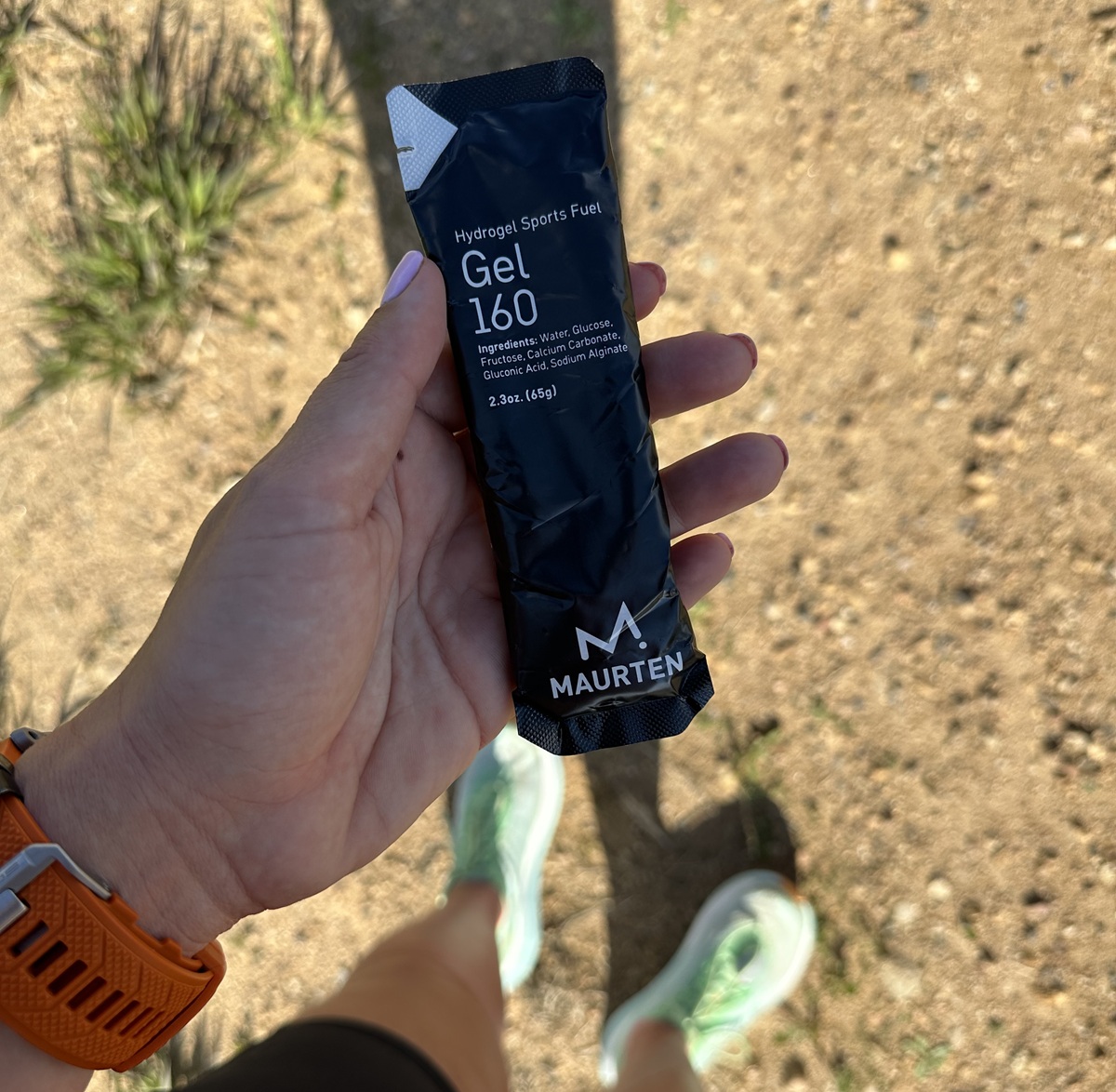
High Carb Gel – Maurten Gel 160
As with all gels the benefit is going to be that it’s compact and targeted carbs. This is one of the higher end brands, so you’ll see other options below that drop the cost per serving for gels.
- Servings per pack: 1
- Grams of carbs per serving: 40g
- Cost per serving: $7.05
👉 cost-effective option: Solely Dried Pineapple Pieces
Reminder this is going to require almost 2 servings to hit the same amount as the 40 gram gel. So in this case it’s absolutely cheaper, but also requires more chewing and brings in more fiber.
- Servings per pack: 1
- Grams of carbs per serving: 22g
- Cost per serving: $1.83
- Servings needed to reach 30 grams of carbs: 1.5

👉 cost-effective option: Pretzels
A favorite option for salty sweaters, it’s one of the cheaper options available! But again remember that you’ll be doing a lot of chewing to get through a bag and a 1/2. Plus, you’ll need to swig a lot of water with this because of the dry mouth effect.
- Servings per pack: 8
- Grams of carbs per serving: 21g
- Cost per serving: $.60
- Servings needed to reach 30 grams of carbs: 1.5

Sport Energy Chews – Skratch Chews
We’re huge fans of Skratch for the lack of artificial ingredients and find they sit will with our athletes. What some folks notice is they love them on long runs, but struggle to chew enough when hitting race pace. So it’s important to test them during hard workouts too.
Code: AMANDA20 is good for 20% off
- Servings per pack: 2 (5 chews per serving)
- Grams of carbs per serving: 19g (38g per pack)
- Cost per serving: $1.50 ($3/pack)

👉cost-effective option: Annie’s Organic Gummies
Especially for newer runners we love trying things like fruit snacks because there is an immediate association with something they’ve had before that felt like a treat! Again there’s a lot of chewing involved and when you get away from the sport option you lose the sodium and higher carb count.
- Servings per pack: 1
- Grams of carbs per serving: 15g
- Cost per serving: $.60
- Servings needed to reach 30 grams of carbs: 2

👉 cost-effective option: Nerds Clusters
Candy has always and forever been an option to fuel your runs. Back in 2005 Coach Amanda was using orange slices to fuel her first marathon training runs and now the hot option is Nerd Clusters. These have a decent amount of carbs making them one of the better options!
- Servings per pack: 8
- Grams of carbs per serving: 25g
- Cost per serving: $.45
- Servings needed to reach 30 grams of carbs: 1

Moderate Carb Gel – Precision Fuel Gel
Another brand that packs a lot in to a small package, which is ideal when you need to carry enough carbs for 4+ hours of running.
- Servings per pack: 1
- Grams of carbs per serving: 30g
- Cost per serving: $3.12

👉cost-effective option: Nature’s Bakey Fig Bars
All of the above options still apply, but maybe you want something a little heartier. We find our runners in the 5+ hour range for the marathon often need a little more because you’re missing an entire meal! This is one option that often sits well.
- Servings per pack: 1
- Grams of carbs per serving: 38g
- Cost per serving: $.34
- Servings needed to reach 30 grams of carbs: 1

👉cost-effective option: Animal Crackers
Another childhood favorite coming to play and that mindset can work wonders. It’s a food you trust, so you believe your gut will too and that’s magic. Downside again is the amount of chewing and dry mouth.
- Servings per pack: 1
- Grams of carbs per serving: 22g
- Cost per serving: $.60
- Servings needed to reach 25 grams of carbs: 1

Low Carb Gel – Science in Sport GO Isotonic Gel
If you’re drinking a lot of carbs from something like a Tailwind or whatever sports drink you carry, then you might not need as much from a gel (or the other options we shared).
- Servings per pack: 1
- Grams of carbs per serving: 22g
- Cost per serving: $2.33

👉cost-effective option: GoGo Squeez Fruit Blend
Any runner who tells us that they can’t stomach gels, we immediately start with fruit pouches on their next run. This is one of the best for ensuring your gut handles the idea of fueling during a run. However,you can see it’s only 17 grams of carbs so we want to work up from this to other options!
- Servings per pack: 1
- Grams of carbs per serving: 17g
- Cost per serving: $1.18
- Servings needed to reach 30 grams of carbs: 2

👉 cost-effective option: Raisins
Noted earlier, raisins are a great carbohydrate option, but requires a high volume. This is a know thyself kind of option. Can you run and toss an entire box down your throat?? Or maybe you’re fine with a walk break to eat this over a gel.
- Servings per pack: 1
- Grams of carbs per serving: 31g
- Cost per serving: $.69
- Servings needed to reach 30 grams of carbs: 1

As you’re planning out your fueling for long runs and even on race day, make sure that you’re checking the gel labels. I’m often having check-in calls with our 1:1 runners, and they’re realizing that the fuel they’re using doesn’t have enough carbs.
Making small tweaks to things like your gels and even hydration can have a huge difference in how you feel, not only during your run but after too.
Is fueling with food cheaper than energy gels?
We recently worked through the numbers to figure out what energy gels are most affordable and to get to 30grams most are above $2.50.
So yes, it’s cheaper to snag a huge bag of Nerd clusters! But things to keep in mind:
- You need to use a hydration mix with sodium to help offset that you aren’t getting any in a gel
- Valuable to mix up your carb sources, so maybe Nerds and applesauce pouches
- Do the math to ensure you are getting enough carbs
- 1 packet of fruit snacks isn’t an even swap for energy chews and thus, you need to consume more while running
- What you eat pre and post run, does not mean you can lower your intra run fuel and expect to have the same level of fatigue resistance and recovery post run
We hope that this list of how to fuel your marathon training for less was helpful! Our team of coaches is always here if you’re looking for more personalized guidance with your training.
Looking for what to read next?
- Half Marathon Fueling Strategy: Why and How You Need to Fuel
- Is Sugar Bad for Runners? What You Need to Know from a Registered Dietitian
- 10 Best Running Hydration Packs and Vests Right Now
The post How to Fuel Your Marathon Training for Less (Without Bonking) appeared first on RunToTheFinish.
from RunToTheFinish https://ift.tt/MmFvKYO
Post a Comment
Post a Comment