Running our first half marathon isn’t just about following a paper training plan. There are pieces often not listed like hip strength or core strength or even how to work on your mindset to run farther than you ever imagined you could. Today we’re going to run through some of the most important first half marathon tips that I know now as a running coach for the last 14+ years!

If you’d told me in 2002 – as I crossed the finish line after running my first race ever (the Rock N Roll Nashville half marathon) – “Amanda, from here out you’ll be running 1,500+ miles a year and at least 9 marathons,” I’d have found a hole to crawl in because that run was fun, but it’s too hard to imagine doing times two!
On the other hand, there’s a lot that would have saved me some mental anguish.
How to Prepare for a First Half Marathon
From setting goals and crafting a plan that fits your style to chowing down on the right stuff and keeping your head in the game, we’ve covered it all in so many articles.
- Remember that gear is important, but far less important than the training (snag our free half marathon training plan)
- Don’t spend too much time fussing over the perfect plan, just get started and then adapt
- Once you have a training program, follow it!!!
- Strength training is the best form of cross training you can do (it’s non-negotiable for anyone we coach)
Today, however, we are focused on race day rather than training. Let’s talk about how to adjust for what will occur over 13.1 miles. It’s so much more than just another long run.
18 First Half Marathon Tips for Beginners
After 20+ years running and coaching, I have a LOT to say on the topic. That’s why I’ve written an entire book and a website with thousands of articles! So for any area you will likely find additional ways to dig deeper. Bookmark this page and it will serve you well throughout training.
Most of these lessons apply to running any new distance, but I found especially pertinent half marathon tips.
1. Slow Down Early in the Race
Push yourself, it’s race day after all, but when you find yourself hitting paces you never saw in training take a breath and reel it back in.
It’s easy for even experienced runners to get swept up in the excitement of the thousands of runners, the cheers and the idea that race day is finally here.
But, you have no idea what their training looked like, so don’t let any ego pressure or adrenaline push you to keep up.
- Your first few miles should be no more than 10 seconds faster than goal pace
- You might even be a few seconds slower as you warm up and find your rhythm
- The best pacing strategy is even (meaning same pace in mile 1 as mile 13) and that’s harder if you start too fast
Bonus: It’s way more fun to be passing people at the end, than praying it was over. In fact, this is what we often look for when hitting negative splits (the second half is faster than the first half). That’s extremely hard to do if you start the race faster than your goal half marathon pace!
**Read more on how to pick your goal race pace >>
2. Have Fun – It’s Allowed!
Remember that you signed up for this whole crazy thing to have a fun goal that would keep you motivated. While you’re going to push yourself just a tad harder on race day, it’s not supposed to be miserable and in fact you might find you actually love it, if you just take a second to look around.
Everyone talks so much about what hurts or what didn’t go well, that I think we forget this whole thing can be a whole lot of fun!
There are people in whacky costumes, friends and family ready to support you and we must never forget the post race meal…mmm burgers.
**Read more on managing race day nerves >>
3. Fuel By Time Not Mileage
Fueling is not just for elite runners; you can’t wing it on race day. I failed so miserably at this in my first that I crossed completely wiped out, as do most first time half marathon runners!
Your body cannot hold a higher than normal pace (where your heart rate is higher) when it doesn’t have quick carbs available to fuel both your brain and your muscles.
- Start the race well fueled, don’t skip the carb load and don’t skip breakfast
- Ensure you have been hydrating well prior to the race
- Sip electrolytes every mile
- Take in 30-60 grams of carbs per hour, which probably means a gel every 30 minutes
Fueling will absolutely help you not just feel your best, but enjoy the race more. Your brain runs on carbs and as they get depleted suddenly you get emotional or start thinking about why this is too hard.
**Read how to fuel during a half marathon>>
**Read what to eat on race morning >>

4. Create a Packing Checklist
If you’ve ever been called Type A this is the time to really put it to work for you.
Get totally anal retentive about planning what you’re bringing to the race. You can certainly buy things last minute at the expo, but save yourself the anxiety by having your perfect gel, socks and any potential variation of weather outfit available.
Folks who have done the Disney World Marathon will tell you they always pack thinking it’s a Florida race and have been surprised at the start more than once with a 30 degree day…no fun without any warmer clothes.
Be prepared for all scenarios to keep calm, chafe free and enjoy the day.
**Get an easy printable race day checklist to be on top of EVERYTHING you need and how to plan for family meet ups and other things we often forget.
5. Wear Throw-away Clothes
Swing by Salvation Army the week of the race. The idea of throw-away clothes sounded preposterous to me, but this makes the start line experience exceedingly more enjoyable.
You may be outside in cool or wet temperatures for hours before the race begins in the pre-dawn chill.
Beyond comfort, keeping your body warm preserves much needed energy.
- Sweatshirt
- Hat
- Gloves
- Sweat pants
If it’s not a cold race, you might only need some knit gloves you can toss and trust me they are worth the $1 to buy! Tuck them in your shorts if you warm up, just in case you turn back in to the wind later in the race (A tip from Ryan Hall).

6. Should You Run With Music?
A lot of the courses say no music, so like a rule following girl I would show up to find tons of people with headphones.
While the rule is in place for a good reason (runner safety), if it’s not a trail race and you can run with 1 ear bud it’s very rare that race officials will enforce this rule. In fact, I’ve literally never seen it enforced.
- Consider starting the race with your music off
- Take in the energy around you, don’t let your pump up song send you out of the gate too fast
- Turning it on the second half can give you a mental boost when things are getting hard
- Have a playlist of songs you know you like! You’ll be surprised what’s suddenly annoying at mile 10.
7. Learn How to Drink on the Run
First, remember you don’t have to drink at every aid station or drink the entire cup provided. But you absolutely need to consistently hydrate throughout the race to prevent fatigue and to help your gut with gels.
- Dump some out if it seems too full
- then pinch the cup, so the side creates a point
- SIP
- Guzzling rarely leads to a happy stomach
Once you’re done, look around and try to toss it all the way off to the side, so you don’t create a slick mess underfoot for runners behind you.
8. Spring for the Good Running Shoes
Department store running shoes are cheaper because they’re less durable, don’t include the best foams and lack some of the fit that helps your feet over 13.1 miles.
The one’s you bought from the department store may have worked fine in the past, but they aren’t suited for the increased mileage you’ll be covering. Running stores are there to help, but we have hundreds of reviews here too if you just aren’t sure where to start checkout our best running shoes for beginners.
Don’t: Let the shoe store talk you in to a shoe that isn’t comfortable just because of a 30 second treadmill analysis of your gait.
**Learn how to find the right running shoe>>
Running gear can easily become expensive. So beyond your shoes, don’t fret. I ran my first marathon in a cotton t-shirt and absolutely survived. I certainly prefer my dry fit and GPS watch now, but they won’t make or break your race day.
9. Check Your Ego
Check it at the door because you’ll find yourself getting passed by people older, fitter, taller, shorter, thinner, heavier, with strollers and none of it matters. What matters is you showed up and crossing that finish line is automatic PR.
If it’s not the time you want, the great news is your next race will be another PR!

10. Beat That Quitting Feeling
Get real about the fact that during training and the race you will feel like quitting. Assuming you haven’t slacked on your training and could be on the way to injury by plowing ahead, don’t worry when this moment strikes.
While you should be fired up for your first half marathon, a bit of realism (not fear) makes this moment something you can move through.
Get focused on all of the reasons why you want to cross that finish line and how it will feel to say “I freaking ran 13.1 miles”. Knowing that you aren’t the only one having this thought is also very comforting, so don’t be afraid to look at a fellow runner and say “we got this”.
They might need the pep talk too.
** Learn some tips to overcome the negative thoughts while running.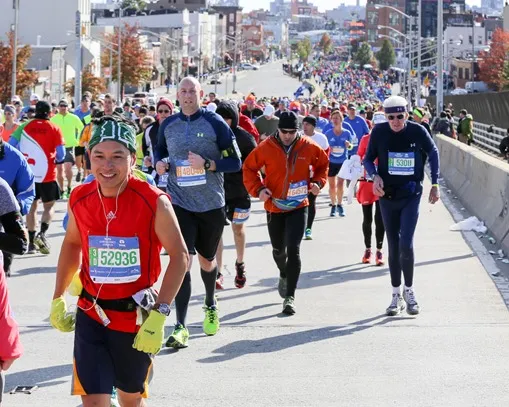
11. Have a Spectator Plan
Plan ahead to know what your fans will be wearing and where they hope to be.
- Pick a mile marker or spot you can easily remember while running
- Plan where to meet post race
- Give them bells and signs
It’s often easier for you to spot them than the other way around. I definitely missed friends at those first races because I thought they would certainly see ME.
** Share these race sign ideas to help them out >>
12. Prep to Prevent Chaffing and Blisters
On race day you may suddenly find yourself chaffing in places you didn’t even know existed.
Put Body Glide on every conceivable inch of the body, not just select spots like your thighs, but on race day get in between every toe, under every arm, and even around your waistband. It’s worth it.
- Cotton is a no go, it will get heavy and more easily lead to chafing
- Rainy days you’ll actually want less clothing to prevent chafing
- New shoes aren’t the end of the world, but less than ideal for potential blisters or black toenails
**Read more on all the tips to avoid blisters on race day >>
13. Embrace the Rain, Sun, Snow
Watch the weather so you can plan your race day outfit and throw-away gear, but after that stop worrying about it. My first race was in the rain as have been many that followed and once you start running the rain can actually be a great way to keep from getting too warm…on a cold day it’s just another part of the race.
Plus once you cross that finish line, you feel just a little more bad ass and that’s half the fun too.
- Tips for racing in the rain
- Our top running rain jackets
- The mental side is what you will most need work on here
- Have a great mantra, find ways to keep it fun, be like a kid with the puddles
14. Run Solo in Your Training
Practice running solo at least once a week during training.
If you always run with someone and find yourself solo on race day it can immediately throw off your entire day. Know you can rely on yourself.
- This will ensure you know how to pace yourself based on how you feel
- It teaches you how to dig deep when everything hurts
- Solo runs allow you to practice fueling, really thinking about what is working for you
- Read more on why you should run solo >>

15. Stick to Your Plan
Finally, it’s important to know that every runner you meet will have an opinion about how you should train, what to wear, what to think; it’s great to listen to all of the advice, but after that you need to decide what fits your personality and then stick to a plan.
And if you really need a coach, then work with someone who understands you!
RTTF has a team of 10 experienced online running coaches happy to help you through all the up’s and down’s no matter your pace.
BONUS: Practice Good Recovery After Your Long Run (and all runs really)
Spend time learning about recovery.
Compression pants, ice baths, sports nutrition, all of these things ensure that during training you can continue putting in the miles and after the race you can resume training without too many days of walking down stairs sideways.
Whether it was the best or worst experience of your life there is often a desire to get right back to training, but your body won’t be ready right away.
Those who do jump back in often find themselves injured within a few months. A few extra easy weeks are worth avoiding months of frustration.
**Read the complete post race recovery guide >>
What to read next?
- See all our half marathon training articles
- Best Garmin Watch for Any Runner
- What to wear for a half marathon
The post What I Wish I’d Known Before Running My First Half Marathon appeared first on RunToTheFinish.
from RunToTheFinish https://ift.tt/PcU9TSB
Post a Comment
Post a Comment